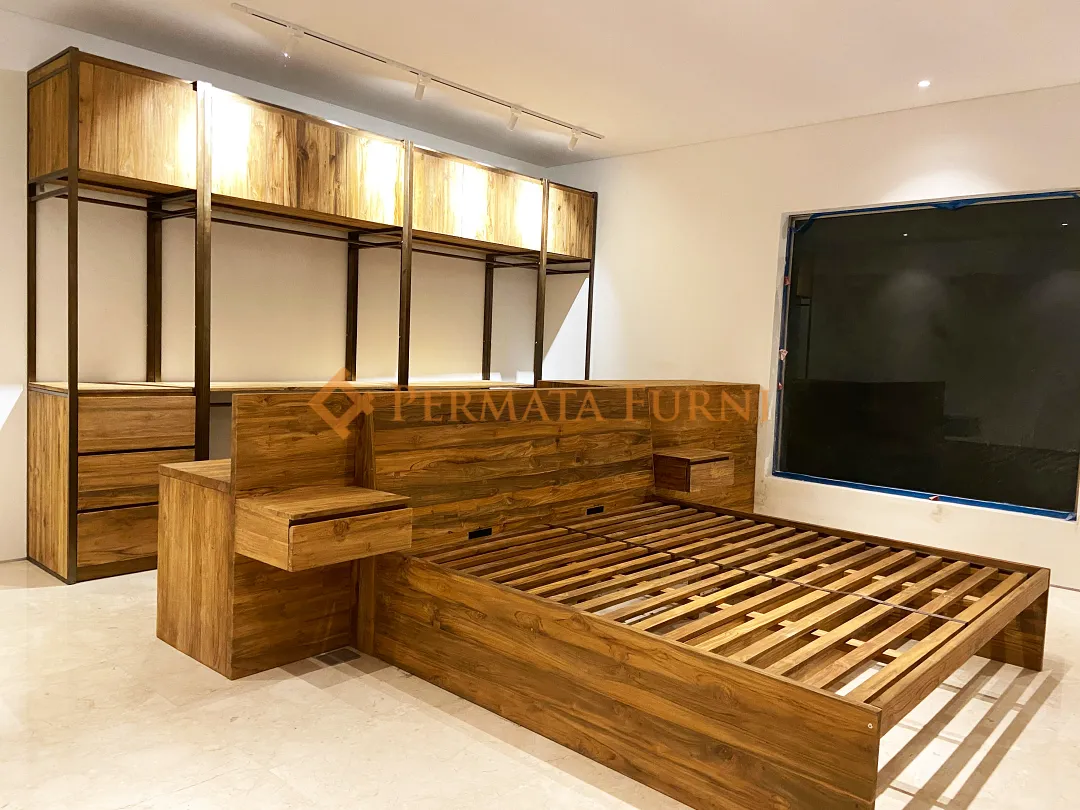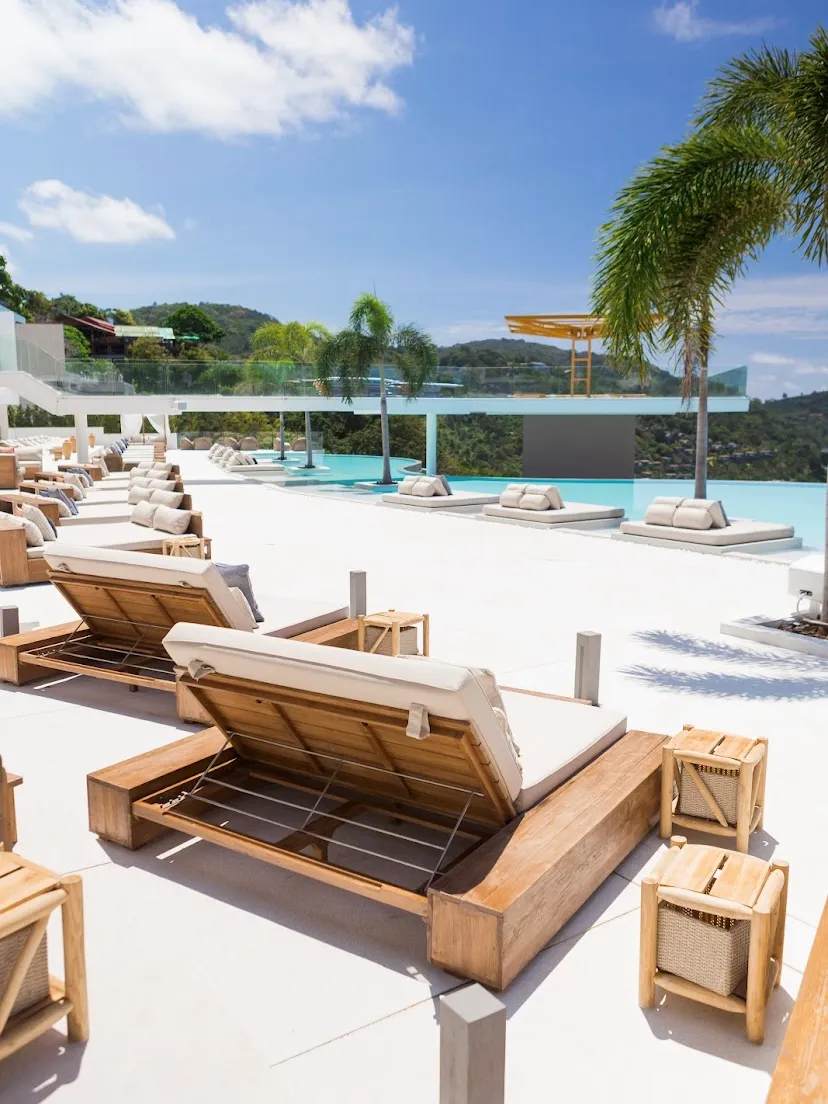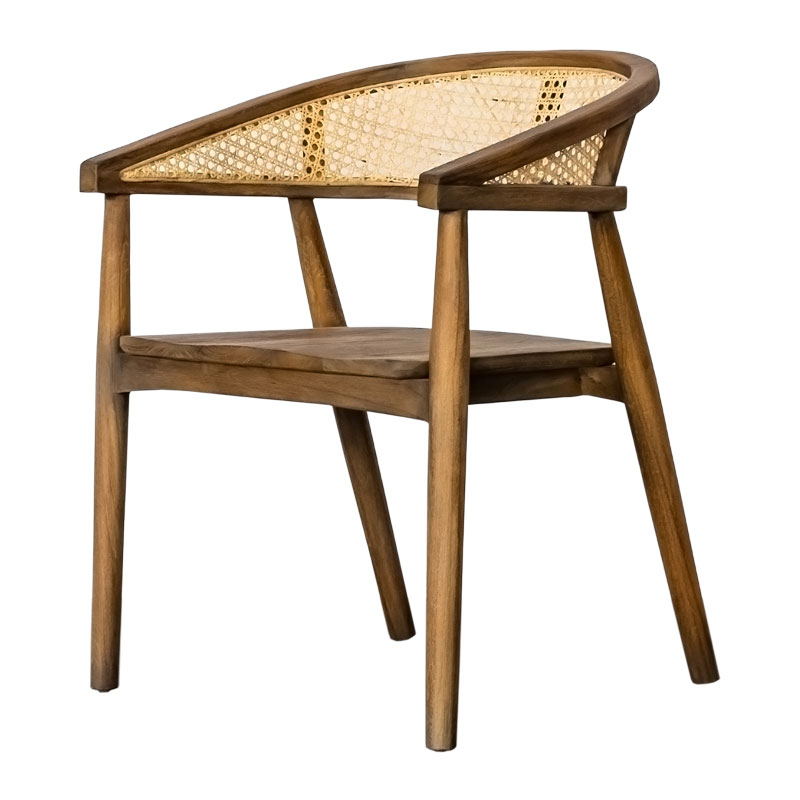

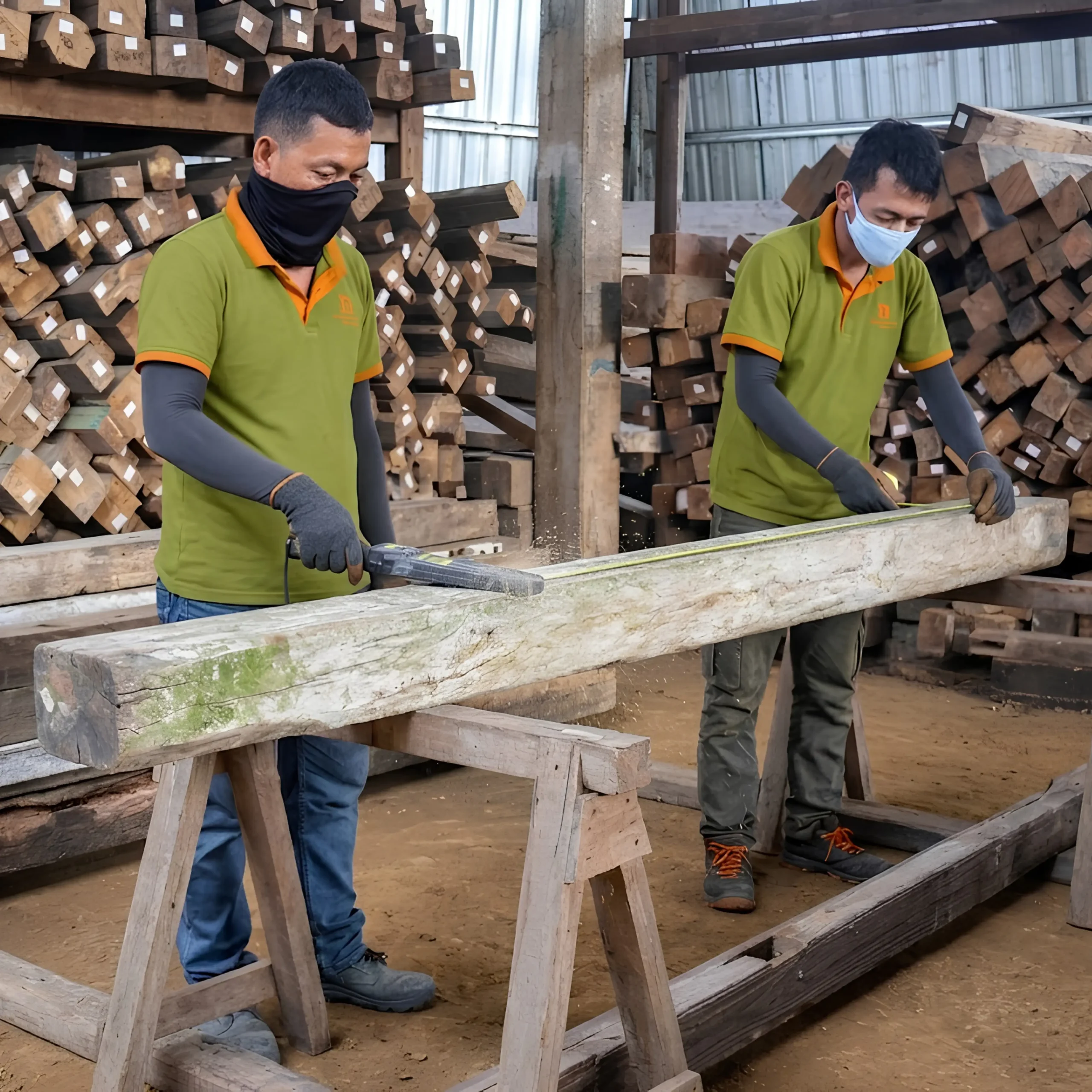
Reclaimed teak is old-growth teak (Tectona grandis) recovered from structures that have reached the end of their service life — then de-nailed, re-milled, kiln-dried, and manufactured into new furniture and building products. Nearly all of the world’s commercial reclaimed teak supply comes from one place: the Indonesian island of Java.
This article explains where that wood comes from, why Java became the world’s reservoir of recoverable teak, how the recovery process works, and what the origin story means practically for B2B buyers evaluating the material. It is part of our complete guide to reclaimed teak furniture for B2B buyers.
To qualify as genuinely reclaimed, timber should meet three conditions:
All three matter commercially. The first two determine the material’s performance; the third determines whether the sustainability claim survives an audit.
Teak is not native to Java — it was introduced from mainland Asia centuries ago and cultivated systematically long before European contact. But it was during the Dutch colonial period that teak became the island’s default construction material at enormous scale.
From the 17th century onward, the Dutch East India Company and later the colonial administration managed Java’s teak forests as a strategic resource — for shipbuilding, railways, and construction. Across Central and East Java, teak went into:
These structures were built from slow-grown, old-growth trees — many over a century old at harvest. That timber profile effectively no longer exists in commercial forestry anywhere in the world.
A century later, those structures are reaching the end of their lives. Families replace timber houses with masonry; barns and mills are decommissioned; infrastructure is modernized. Rather than being burned or landfilled, the teak inside them is carefully deconstructed and sold into a well-established recovery trade — because Javanese owners have always known exactly what that wood is worth.
The result is a steady, organized supply of recoverable old-growth teak flowing from villages and demolition sites across Central and East Java into beam yards around furniture-manufacturing centers like Semarang and Jepara.
The journey from standing structure to usable furniture timber is labor-intensive — and it is where most of reclaimed teak’s cost is created.
Only after all five stages does the timber enter furniture production. This is why credible reclaimed teak cannot be priced like plantation timber — the labor chain behind each board is fundamentally different.
The Javanese origin story is not just provenance romance — it has three practical consequences for commercial buyers:
For a supplier-auditing framework built on these points, see the chain-of-custody section of our B2B buyer’s guide, or our page on choosing a B2B source for reclaimed teak furniture.
In the furniture trade the terms are used interchangeably. Both refer to old-growth teak recovered from prior structures. “Reclaimed” is the more precise term; “recycled” is common in consumer marketing.
Typically 100–250 years from germination: trees were often 80–150 years old at harvest, and the structures they built served another 50–120 years before deconstruction.
Supply is finite but substantial — Java’s building stock still contains decades of recoverable timber, and structures reach end-of-life continuously. What changes over time is the mix of section sizes available, which is why large clear slabs command growing premiums.
Yes, when sourced from an SVLK-verified Indonesian exporter issuing V-Legal documentation per shipment. Documented reclaimed origin also simplifies EUDR compliance narratives compared to virgin tropical hardwood.
RecycleTeak manufactures reclaimed teak furniture at our own SVLK-verified facility in Semarang, Central Java — beam yard, kilns, and production under one roof, with two decades of export history.
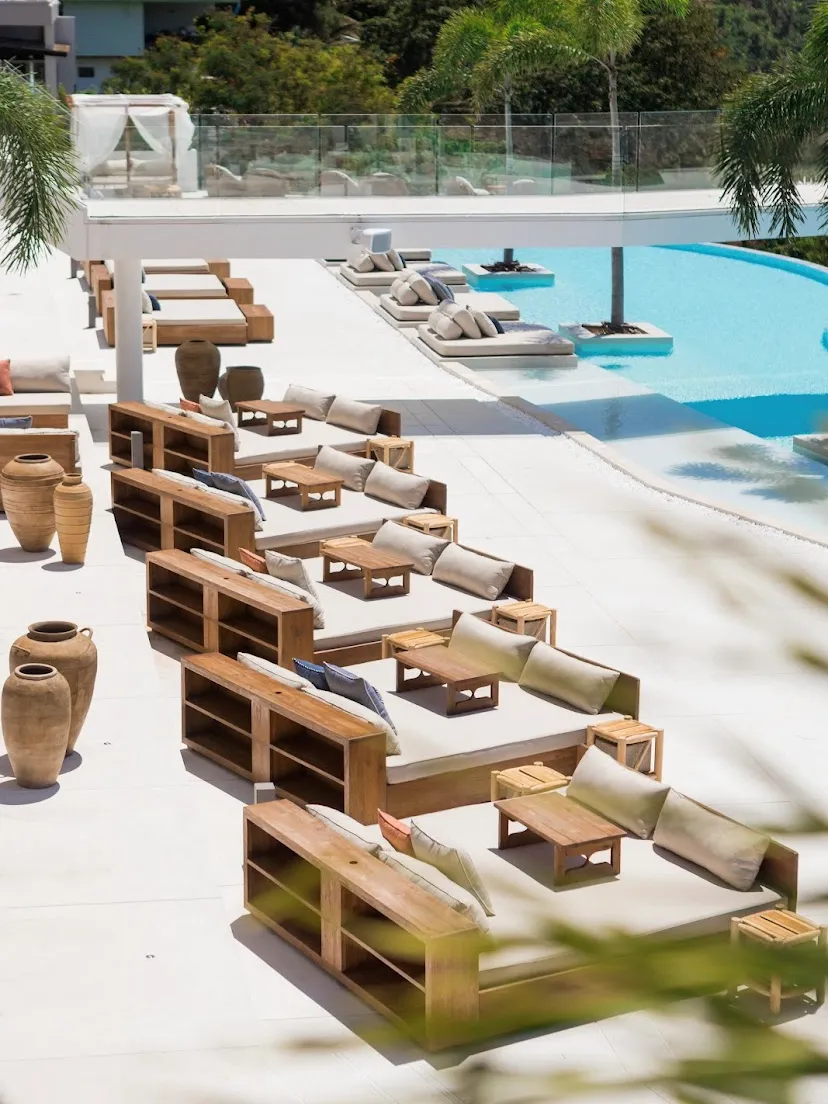

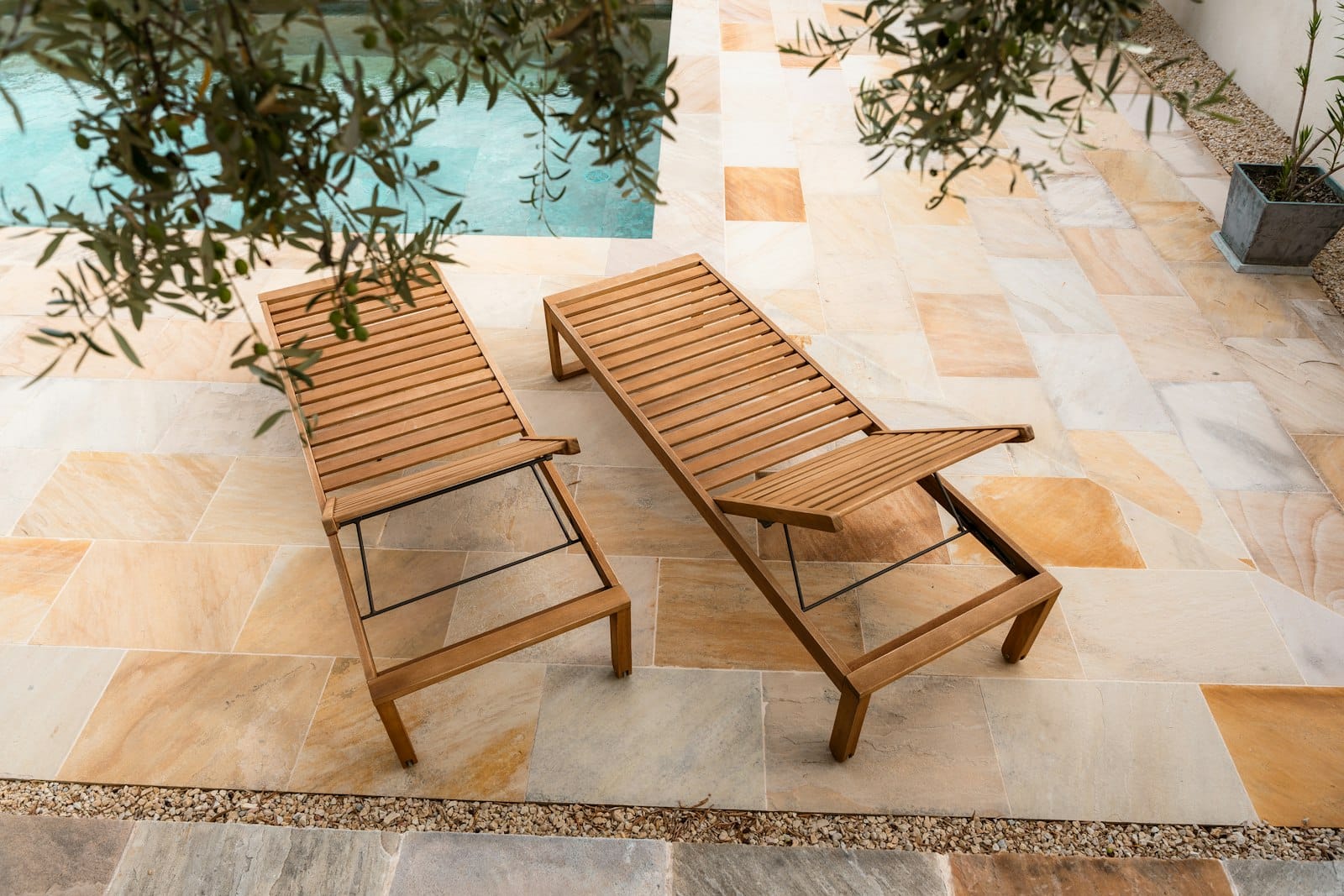
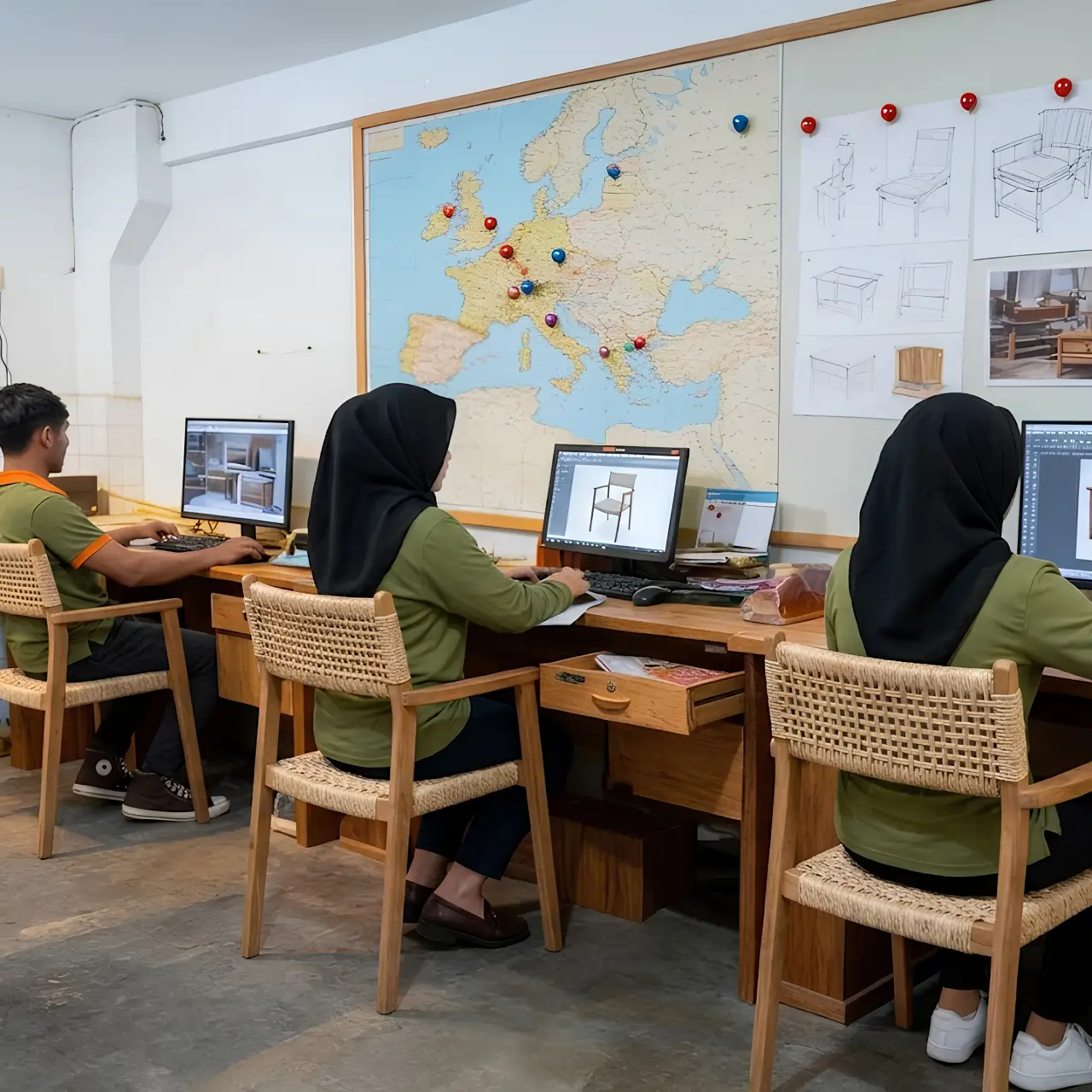
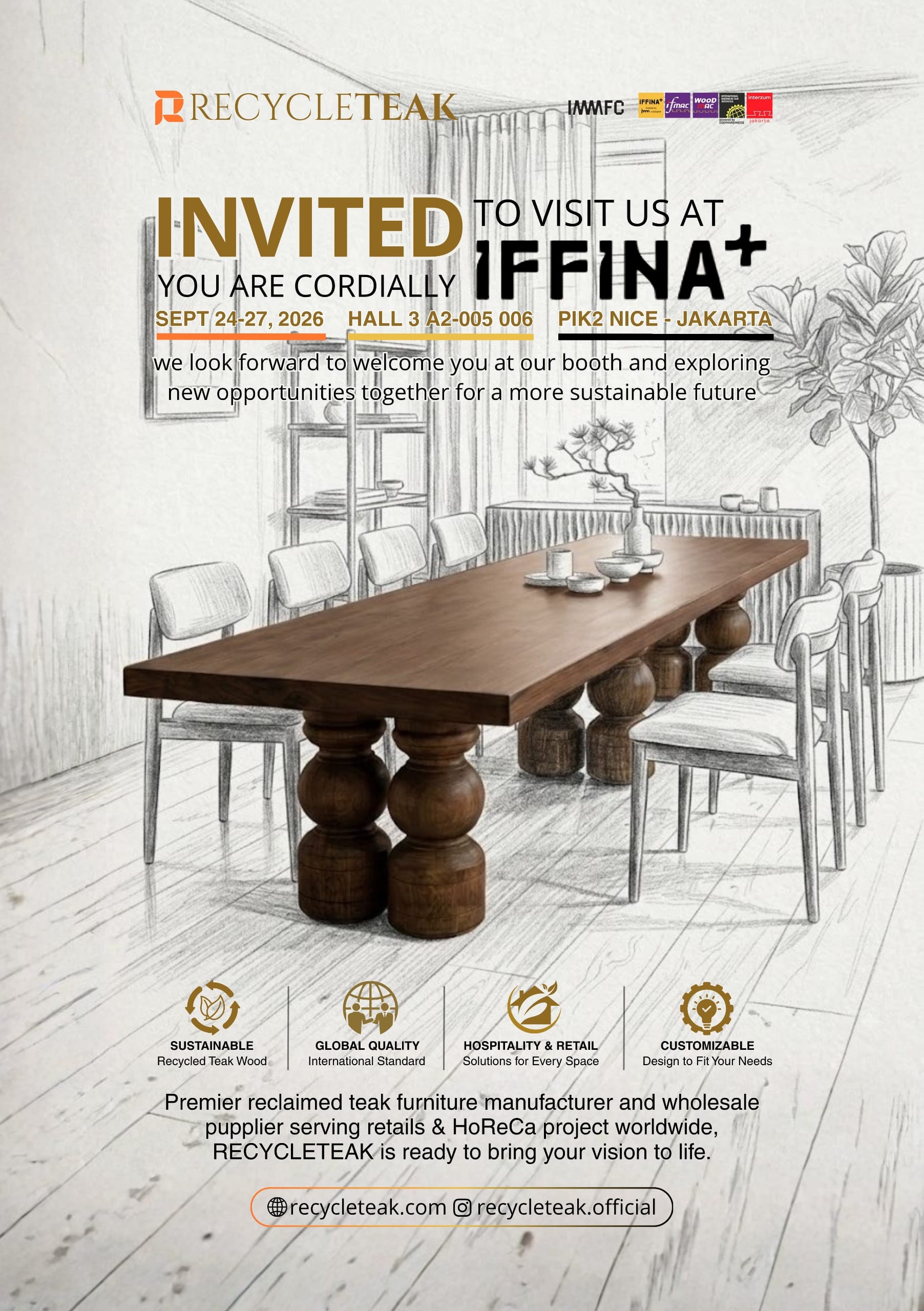
Reclaimed Teak Furniture Manufacturer & Hospitality Furniture Supplier, Indonesia. Sustainably Crafted. Wholesale & Custom Orders Welcome.