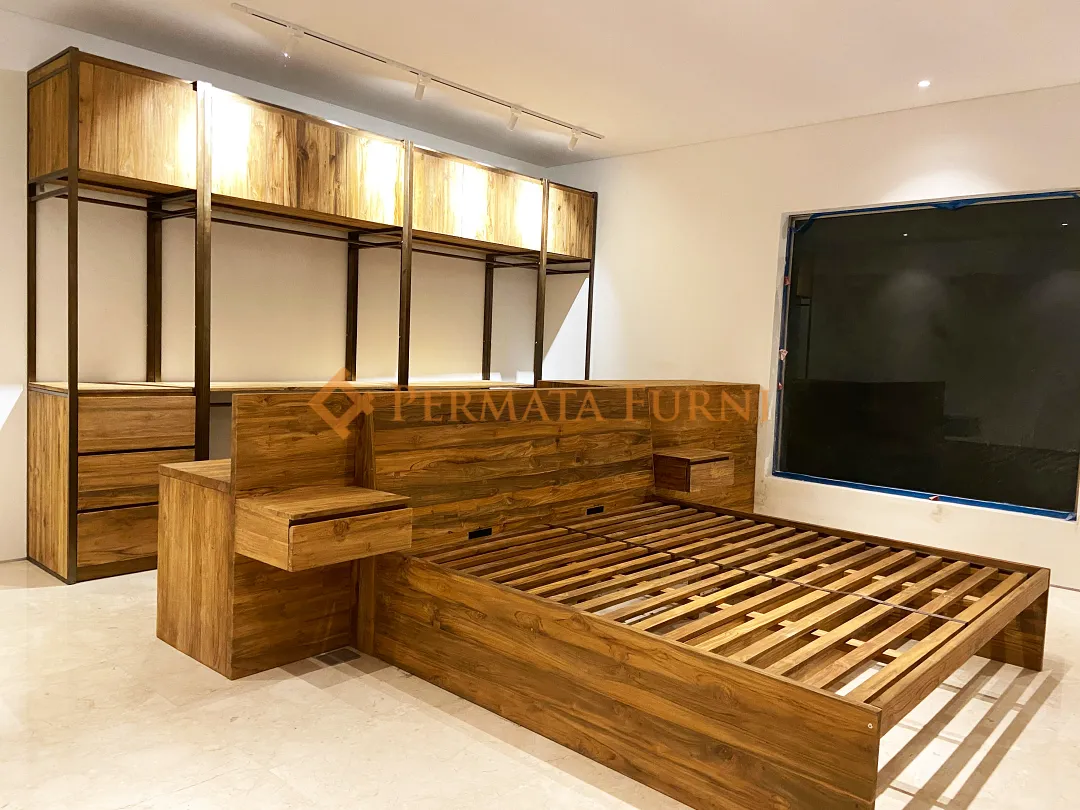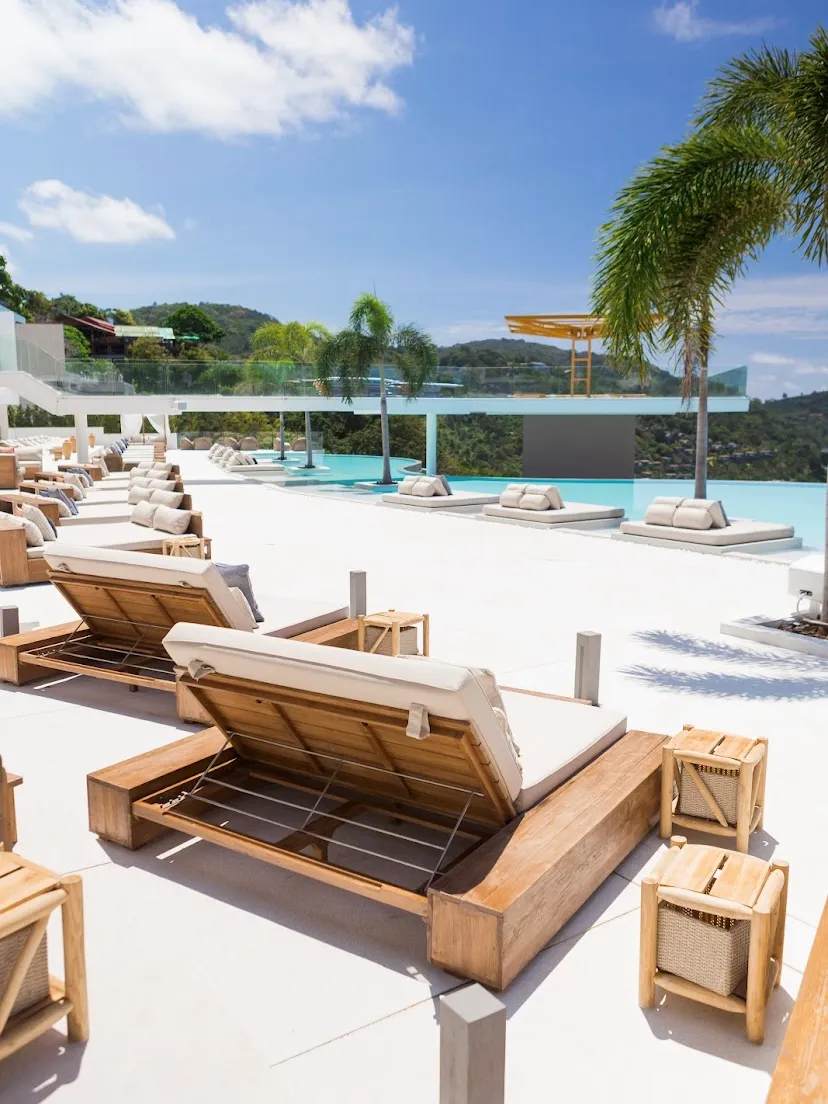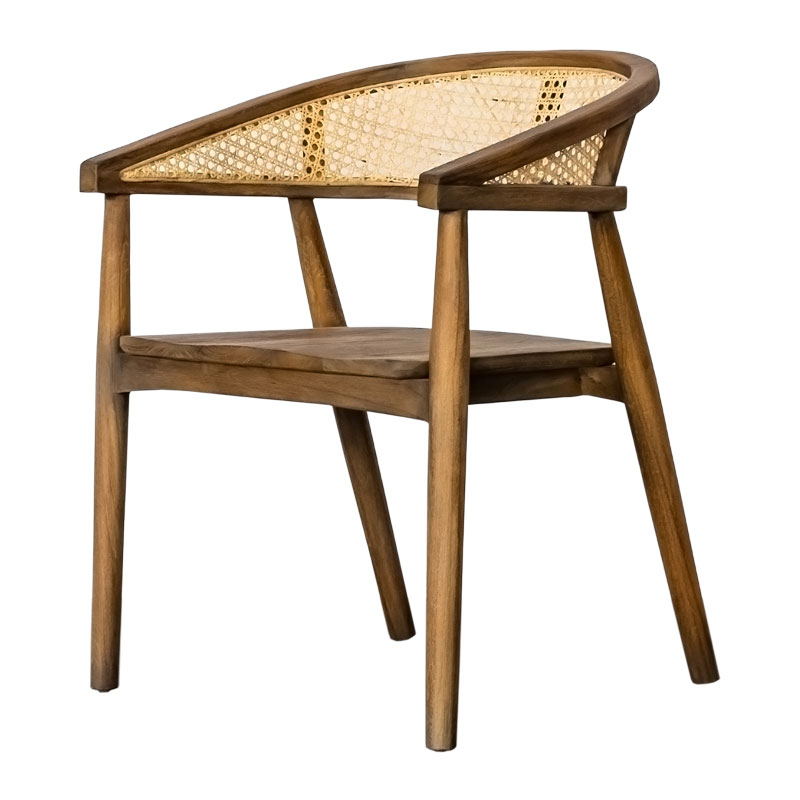

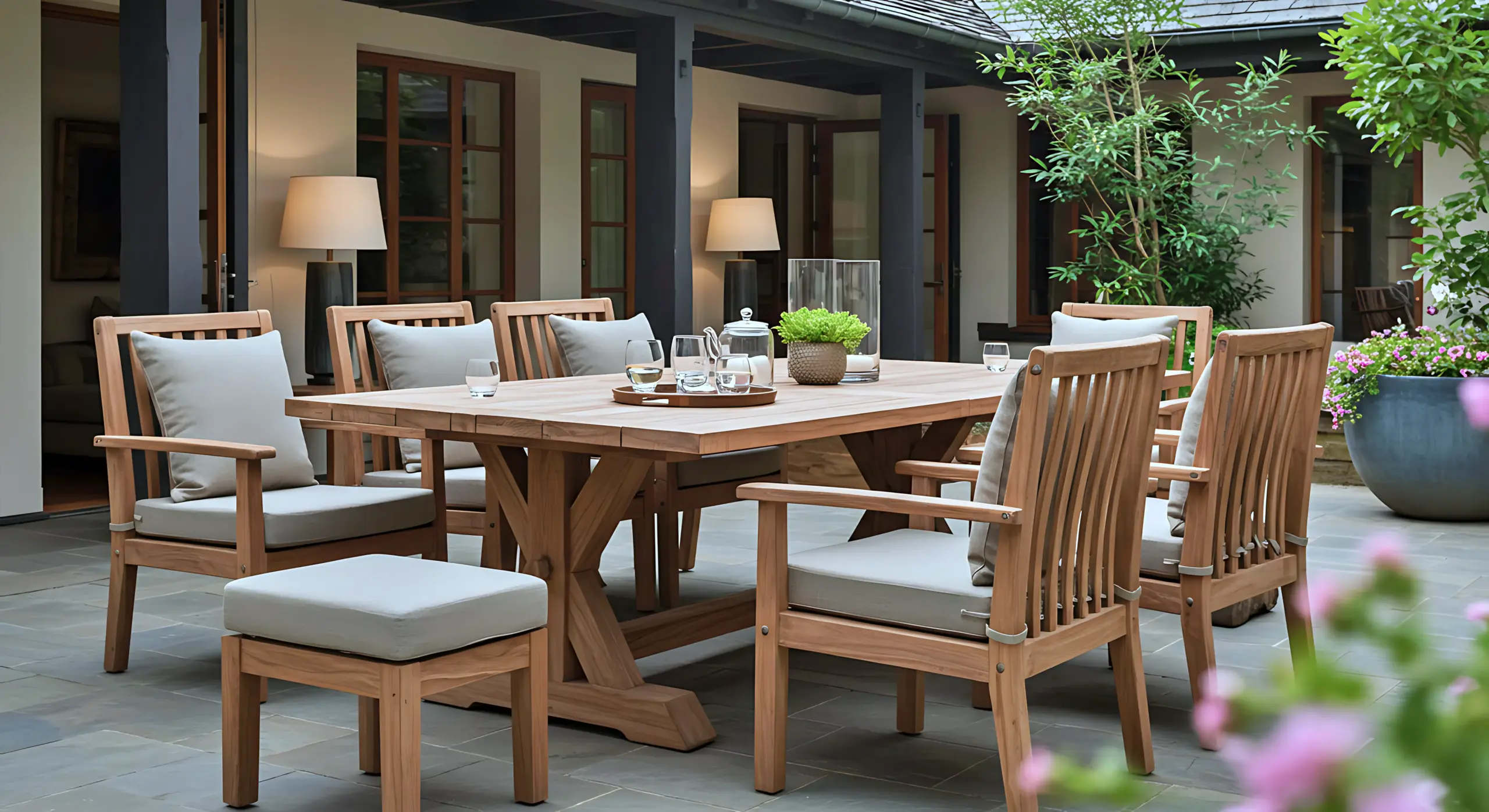
Reclaimed teak furniture has moved from niche curiosity to specification-grade material for hotels, resorts, importers, and retail furniture brands. The reasons are practical, not sentimental: reclaimed teak is denser, more dimensionally stable, and more weather-proven than newly harvested plantation wood — and it carries a sustainability story that procurement teams can actually document.
But the reclaimed teak market is also opaque. Quality varies enormously between suppliers, “reclaimed” is used loosely, and pricing structures confuse first-time buyers. This guide gives commercial buyers a complete framework: what reclaimed teak is, how it compares to new teak, how to verify authenticity and grade quality, what it costs, and how to audit a supplier’s chain of custody before committing to a container order.
RecycleTeak has manufactured reclaimed teak furniture at our factory in Semarang, Central Java for over two decades, supplying hospitality groups, importers, and distributors across Europe, the Middle East, Australia, and the Americas. What follows is the framework we recommend to every serious buyer — whether or not they ultimately buy from us.
Sourcing at scale? Request our wholesale catalog or request a factory-direct quote — response within one business day.
Reclaimed teak is old-growth teak (Tectona grandis) recovered from decommissioned structures — most of it from the Indonesian island of Java. During the Dutch colonial era and the decades that followed, teak was the default construction timber across Java: houses, rice barns (lumbung), warehouses, railway sleepers, bridges, and fishing boats were all built from it.
As these structures reach the end of their service life — typically 50 to 120 years after construction — the timber inside them is dismantled, sorted, de-nailed, and re-milled into furniture stock. That timber came from trees that were often 80–150 years old at harvest, a growth profile that no longer exists in commercial forestry.
Three characteristics define genuine reclaimed teak:
Read the full article: What is reclaimed teak? Origins in Java, Indonesia.
Most “reclaimed vs. new” comparisons in the market are marketing copy. For a procurement decision, the comparison needs to be structural.
| Property | Reclaimed teak (old-growth) | New plantation teak |
|---|---|---|
| Tree age at harvest | 80–150 years | 15–25 years |
| Growth rings | Tight, dense | Wide, open |
| Natural oil content | High, concentrated | Moderate to low |
| Dimensional stability | Movement largely complete | Still acclimating; higher warp risk |
| Outdoor lifespan (untreated) | 30+ years typical | 10–20 years typical |
| Grain character | Weathered figure, nail marks, patina | Uniform, blond |
| Supply consistency | Batch-dependent | Predictable |
| Sustainability profile | No new trees felled | Plantation-managed harvest |
New plantation teak is not a bad material — it is simply a different one. It suits high-volume, uniform-finish programs where batch character is undesirable. Reclaimed teak suits projects where durability, story, and visual depth carry commercial value: hospitality exteriors, flagship retail, and premium residential collections.
The honest trade-off: reclaimed teak has natural variation (color, nail marks, filled voids) that must be treated as a design feature, and supply is batch-based rather than infinite. A competent manufacturer manages both through grading and production planning.
Read the full comparison, including a decision framework for which material to specify: reclaimed vs new teak.
For outdoor applications specifically, the performance gap widens further — old-growth oil content and completed movement matter most where furniture faces rain, UV, and temperature swings. Read the full breakdown: why reclaimed teak outperforms plantation teak outdoors.
Because reclaimed commands a premium, mislabeling exists. Some suppliers sell new plantation teak that has been distressed, stained, or briefly weathered as “reclaimed.” A trained eye can separate the two in minutes.
If a supplier cannot let you inspect end grain or resists questions about origin, treat the “reclaimed” label as unverified.
Read the full inspection guide, including an inspection protocol for container orders: how to identify authentic reclaimed teak.
Reclaimed teak is not one grade of material. Recovered timber is sorted by structural integrity, surface condition, and dimension before it ever reaches a workshop. Understanding the grading logic protects you from paying Grade A prices for Grade C stock.
Two questions to ask every supplier: Which grade goes into visible surfaces versus internal frames? and How do you ensure grade consistency across a 200-piece hospitality order? The answers reveal more about a factory than any showroom sample.
Read the full guide, including how grades should appear on your quote: grading reclaimed teak quality.
Reclaimed teak is priced fundamentally differently from plantation timber, because most of its cost is labor, not stumpage. Recovered beams must be purchased from demolition networks, transported, de-nailed by hand, metal-detected, re-milled, and kiln-verified — with significant volume loss at each stage. Usable yield from raw recovered timber is often only 50–65%.
Cost drivers B2B buyers should understand:
Because of these variables, be skeptical of reclaimed teak quoted at or below plantation prices — the math rarely works unless the “reclaimed” claim, the grade, or the drying is compromised. Request pricing broken out by grade and section size rather than a single blended number.
Read the full pricing breakdown, including a relative price index by grade and how to read a quote: reclaimed teak price per cubic meter.
For landed-cost planning — HS codes, duties, and container loading — see our guide to importing teak furniture from Indonesia.
Sustainability claims in furniture are audited more aggressively every year — by hotel ESG programs, EU import regulation, and end customers. Reclaimed teak’s environmental case is unusually strong because it is structural, not offset-based:
For buyers subject to the EU Deforestation Regulation (EUDR) or corporate ESG reporting, reclaimed teak with documented origin significantly simplifies compliance narratives compared to virgin tropical hardwood.
Read the full breakdown, including how to use the claim in ESG and EUDR reporting: environmental impact of reclaimed vs new teak.
The final and most important step for a B2B buyer is verifying that the supply chain behind the furniture is legal, documented, and repeatable. In Indonesia, the framework to know is SVLK (Sistem Verifikasi Legalitas Kayu) — the national timber legality verification system. SVLK-verified exporters issue V-Legal / FLEGT documentation with each shipment, which is what EU and UK customs recognize.
A supplier who welcomes this checklist is a supplier you can build a multi-year program with. One who deflects it is quoting you someone else’s furniture.
Read the full audit guide, including the five-stage supply chain and the documents that should exist at each link: reclaimed teak sourcing & chain of custody.
Related reading for procurement teams: choosing a B2B source for reclaimed teak furniture and reclaimed teak for the hospitality industry.
Yes — it is arguably the best-suited wood available. Old-growth density, high natural oil content, and decades of completed weathering make reclaimed teak more stable outdoors than new plantation teak. Untreated, it weathers to a silver-grey patina without structural degradation.
Depending on grade and section size, finished reclaimed teak furniture typically carries a premium over comparable plantation product, driven by recovery labor and 50–65% milling yield. Large clear sections (thick tabletops) carry the highest premiums. Always request grade-specific pricing rather than a blended quote.
Check end-grain ring density, through-going nail holes, oxidation depth below the surface, and weight. Then ask for sourcing documentation — a legitimate manufacturer can trace beams back to demolition purchases and holds SVLK verification for legal export.
At minimum, SVLK (Indonesia’s timber legality system), with V-Legal documents issued per shipment. This is the certification EU/UK customs authorities recognize for Indonesian timber legality.
Most factory-direct programs work in container volumes — 20ft (roughly 100–150 dining pieces mixed) or 40ft-HC. Production lead times of 60–90 days after order confirmation are standard for reclaimed programs, since beam stock must be milled and dried for the specific order.
Yes, within honest limits. A capable manufacturer controls consistency through grading discipline and finish standards, but reclaimed batches will always show natural variation. Agree on a control sample and a stated variation tolerance before production.
RecycleTeak manufactures reclaimed teak furniture at our own facility in Semarang, Central Java — SVLK-verified, factory-direct, with two decades of export history to Europe, the Middle East, Australia, and the Americas.
Next steps for B2B buyers:
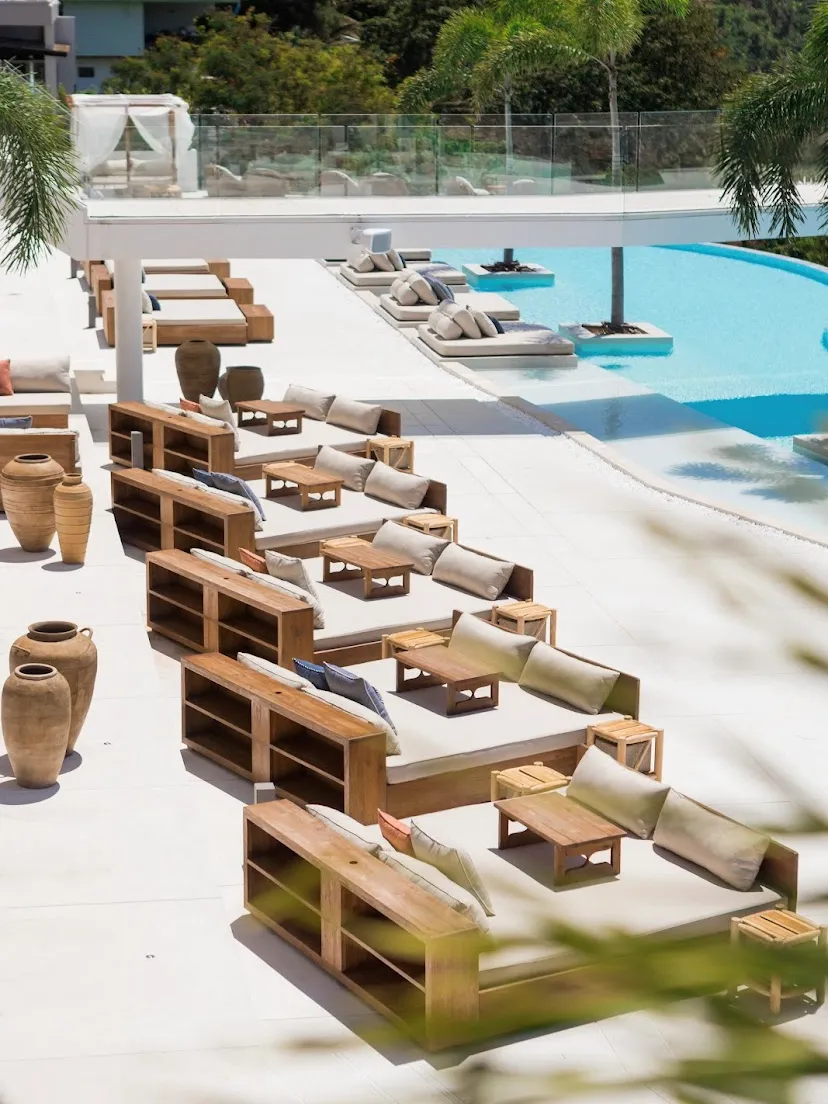

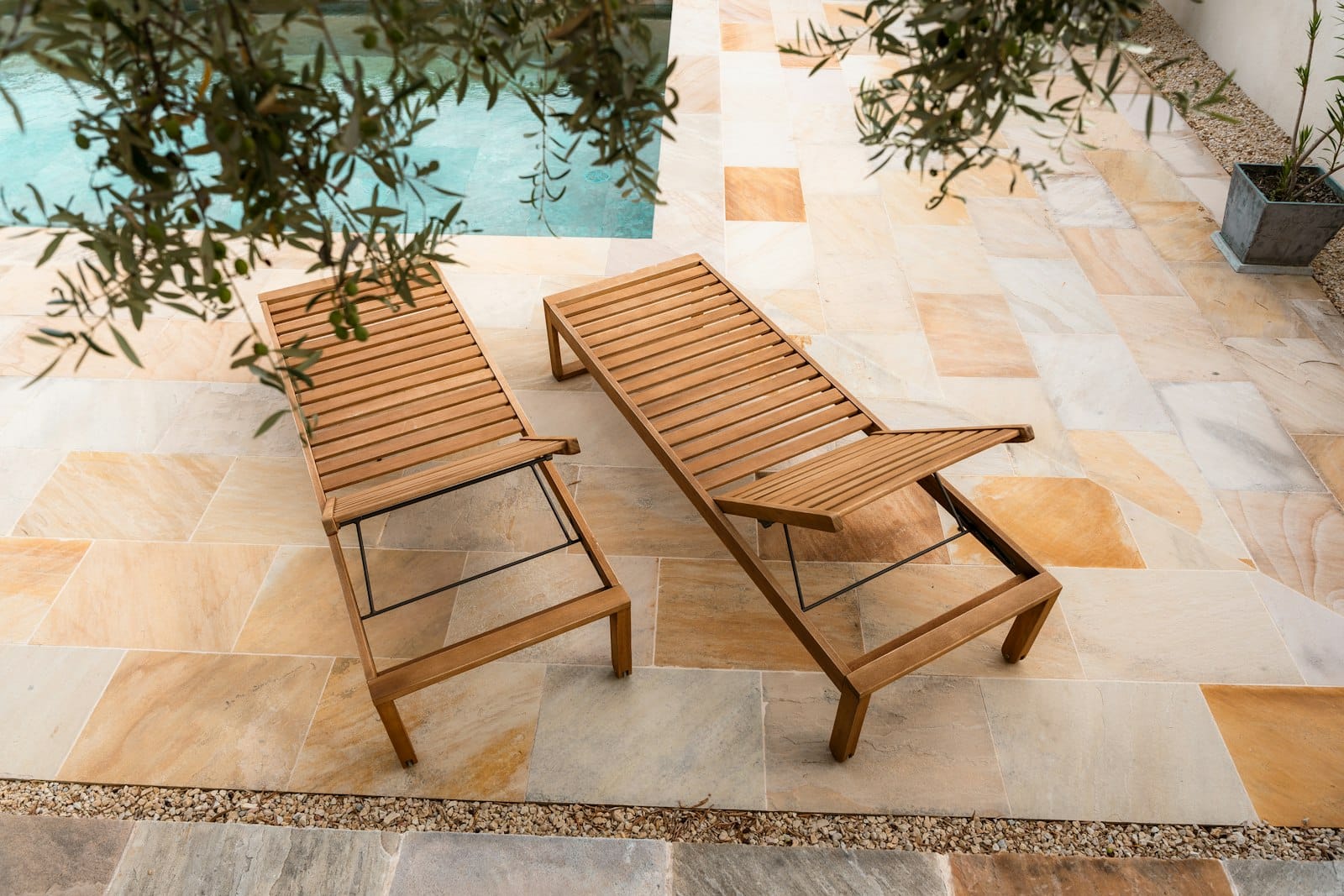
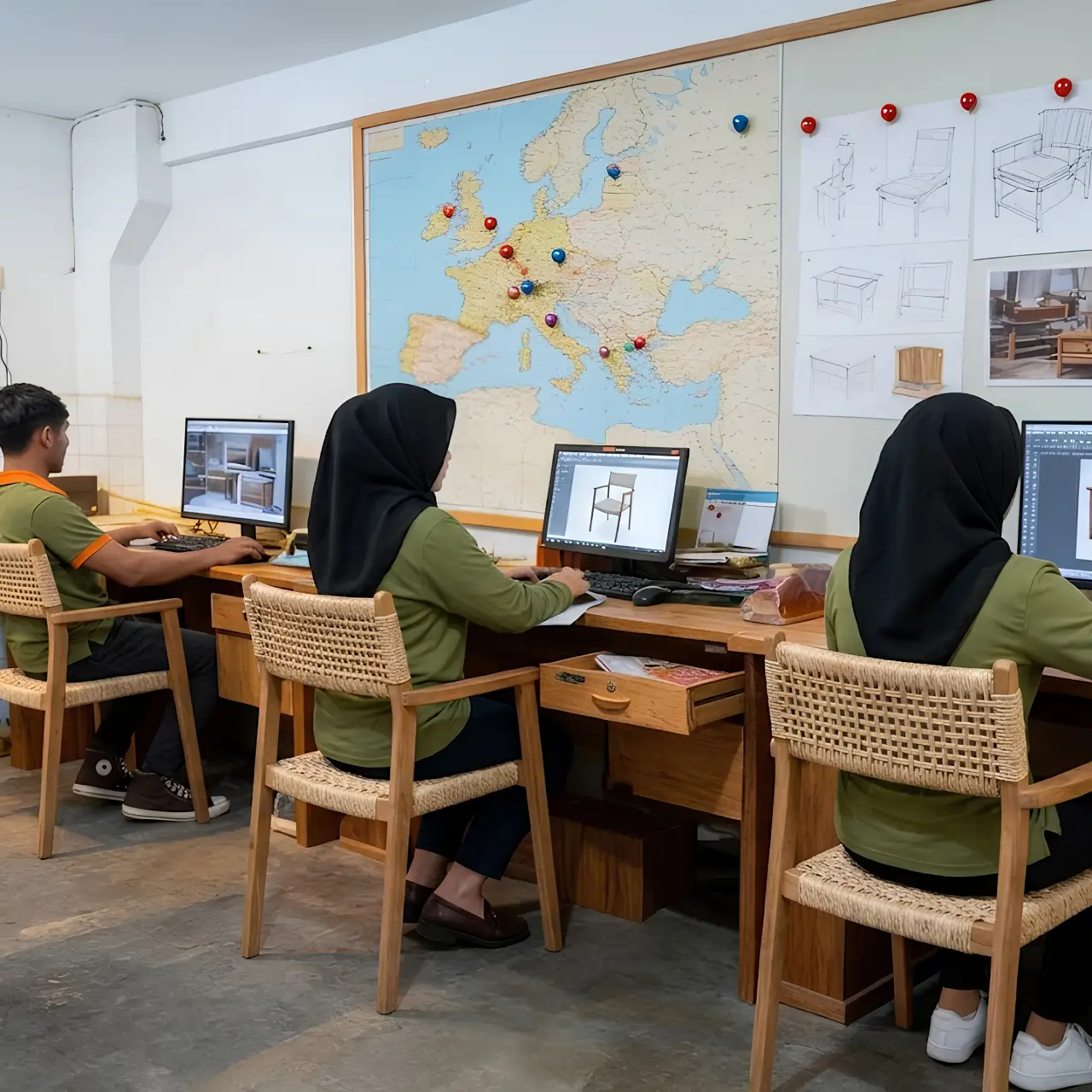
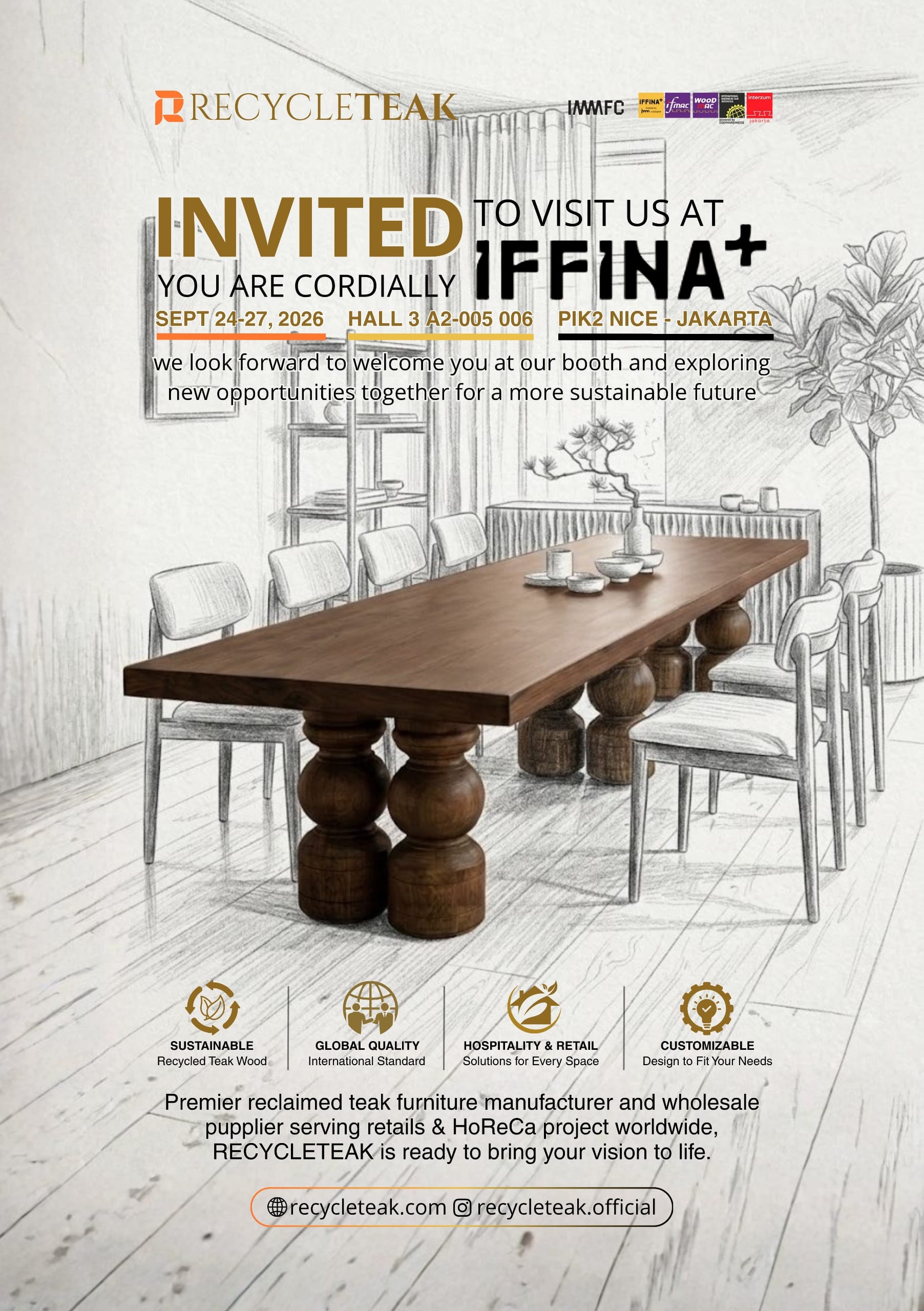
Reclaimed Teak Furniture Manufacturer & Hospitality Furniture Supplier, Indonesia. Sustainably Crafted. Wholesale & Custom Orders Welcome.