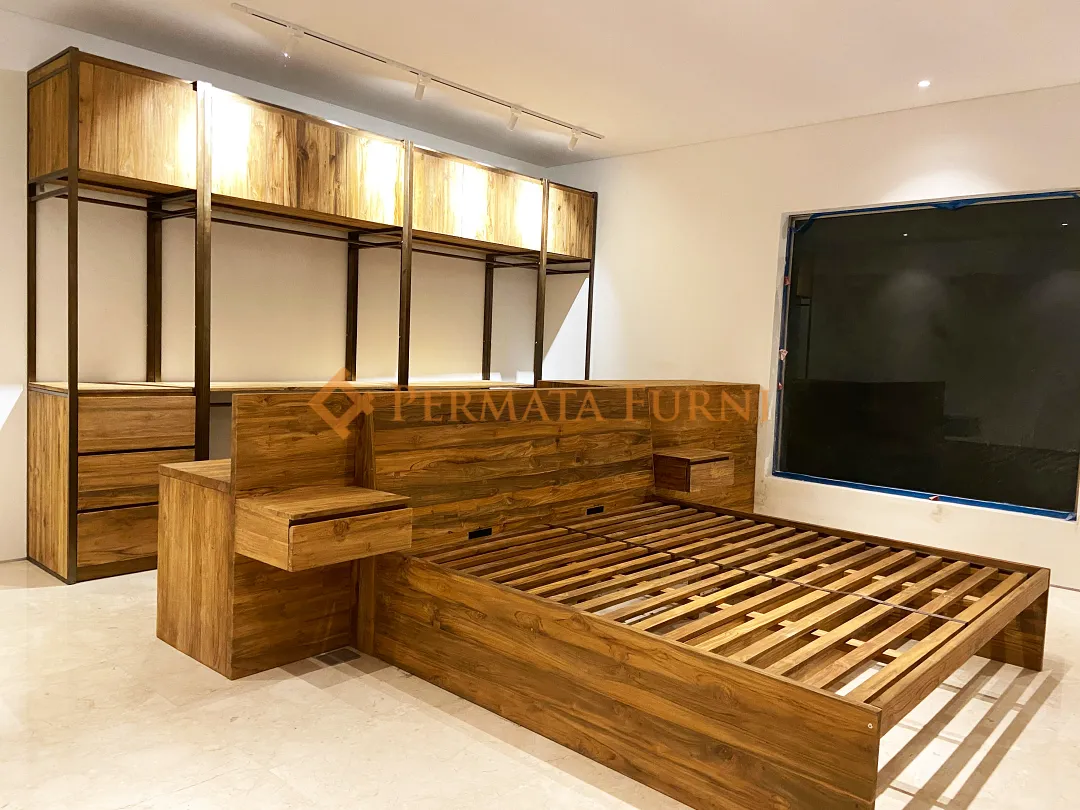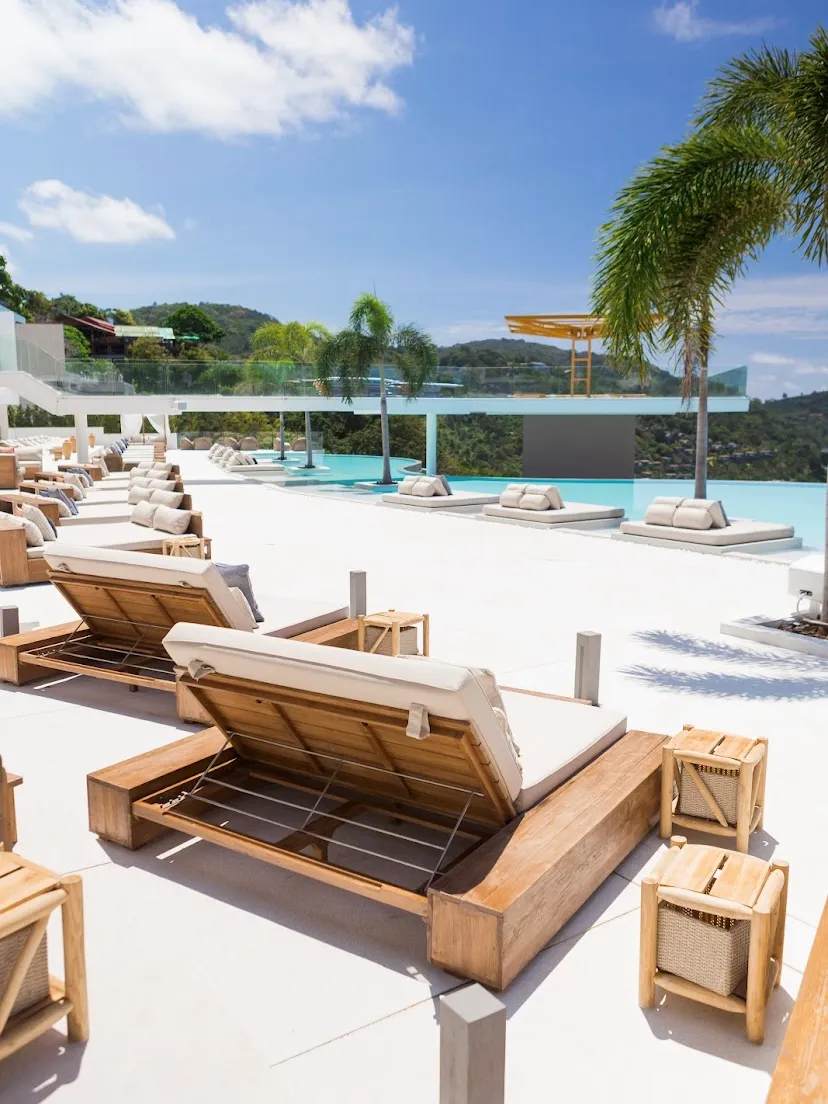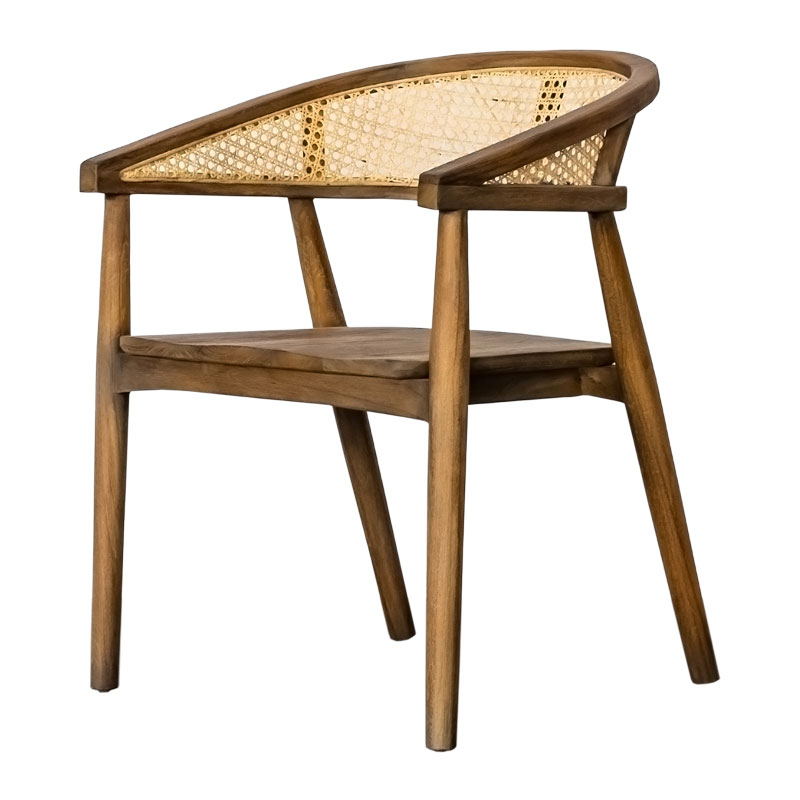

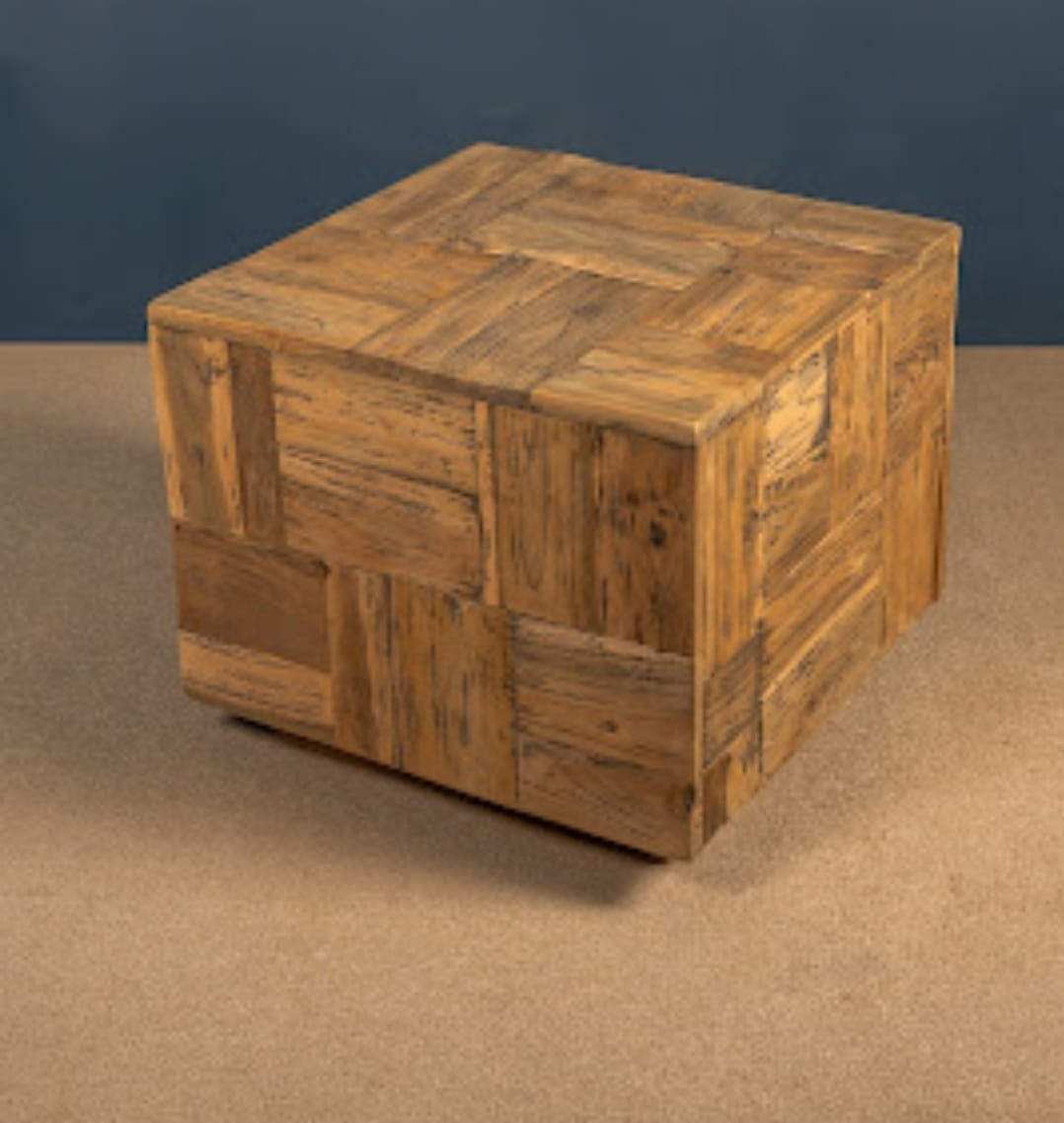
Reclaimed teak and new plantation teak are the same species — Tectona grandis — but they are not the same material. One comes from trees that grew for a century before spending decades more in service; the other from trees harvested at 15–25 years on managed rotations. That difference in biography shows up in density, stability, appearance, price, and sustainability profile.
This article compares the two systematically so commercial buyers can match the right material to the right program. It is part of our complete guide to reclaimed teak furniture for B2B buyers. If you’re new to the material, start with what reclaimed teak is and where it comes from.
| Property | Reclaimed teak (old-growth) | New plantation teak |
|---|---|---|
| Tree age at harvest | 80–150 years | 15–25 years |
| Growth rings | Tight, dense | Wide, open |
| Natural oil & silica content | High, concentrated | Moderate to low |
| Heartwood proportion | Very high | Lower; more sapwood |
| Dimensional stability | Movement largely complete | Still acclimating; higher warp risk |
| Untreated outdoor lifespan | 30+ years typical | 10–20 years typical |
| Appearance | Weathered figure, nail marks, patina | Uniform, blond to honey |
| Batch consistency | Natural variation by source structure | High uniformity |
| Supply | Finite recovery stream, batch-based | Continuous plantation output |
| Price position | Premium (labor-driven) | Commodity to mid-market |
| Sustainability claim | Zero new harvest; documented recovery | Managed-rotation harvest |
The rest of this article unpacks the rows that matter most in procurement decisions.
A teak tree that took 100+ years to mature laid down growth rings slowly and tightly. Ring density correlates directly with mechanical strength, screw-holding ability, and wear resistance. Plantation teak, bred and managed for rapid volume, produces wider rings and softer earlywood bands — perfectly usable wood, but measurably less dense.
Teak’s famous weather resistance comes from natural oils (including tectoquinone) and silica deposited in the heartwood over the tree’s life. Old-growth trees had decades longer to concentrate these compounds, and mature heartwood makes up nearly the entire usable section. Young plantation logs contain proportionally more sapwood, which has neither the oil nor the durability of heartwood.
All wood moves as it exchanges moisture with the environment. Reclaimed teak spent 50–120 years cycling through tropical wet and dry seasons inside a structure — its major movement, checking, and case-hardening happened long ago. New teak, however well kiln-dried, still completes this process in your customer’s climate. This is the single biggest practical difference buyers notice: reclaimed tabletops stay flat.
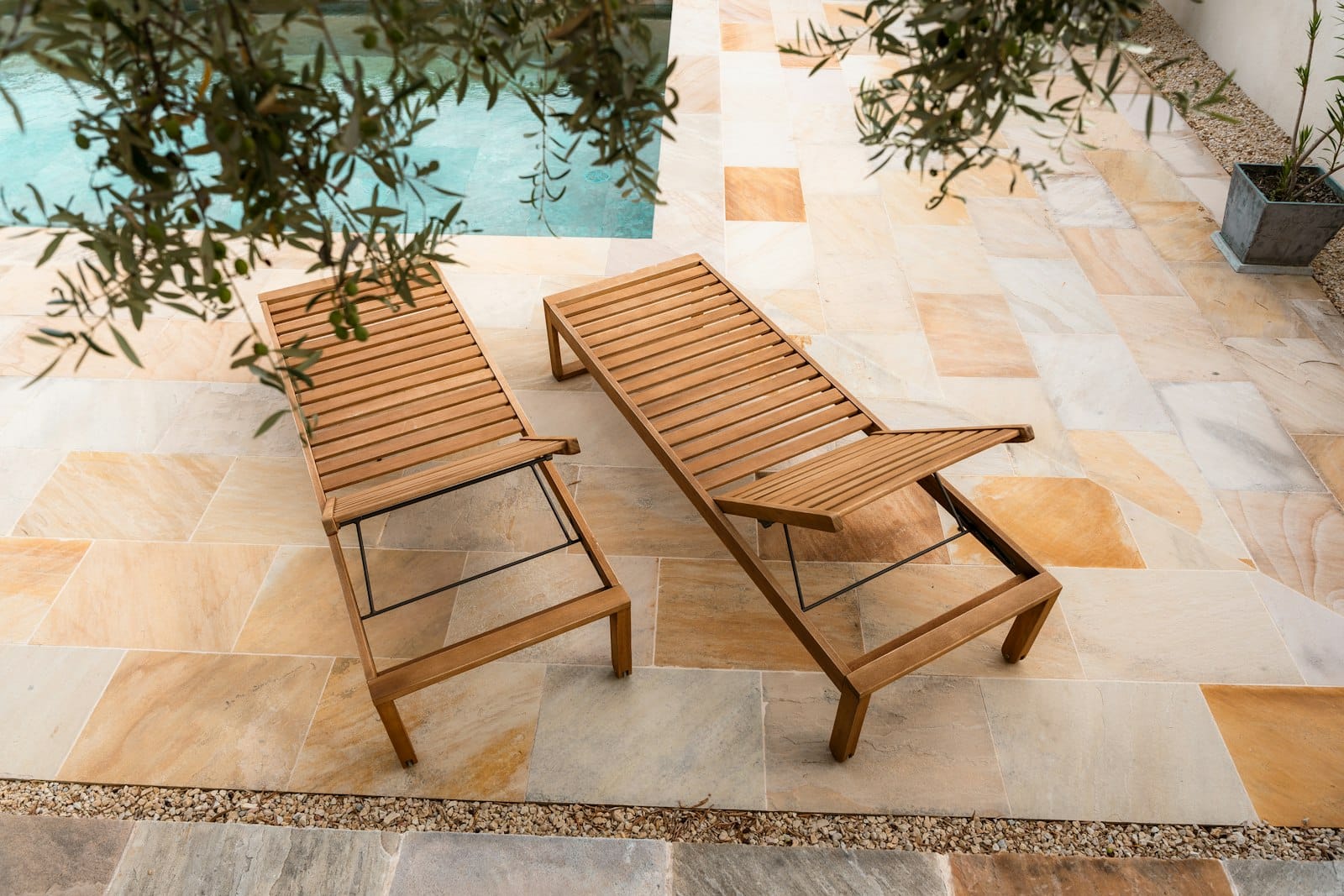
Outdoors is where the gap widens from measurable to decisive. Higher oil content sheds water; density resists surface breakdown; completed movement prevents joint stress during seasonal swings. Untreated reclaimed teak routinely serves 30+ years outdoors, weathering to a stable silver-grey patina, while plantation teak typically shows structural wear a decade or more earlier under the same exposure.
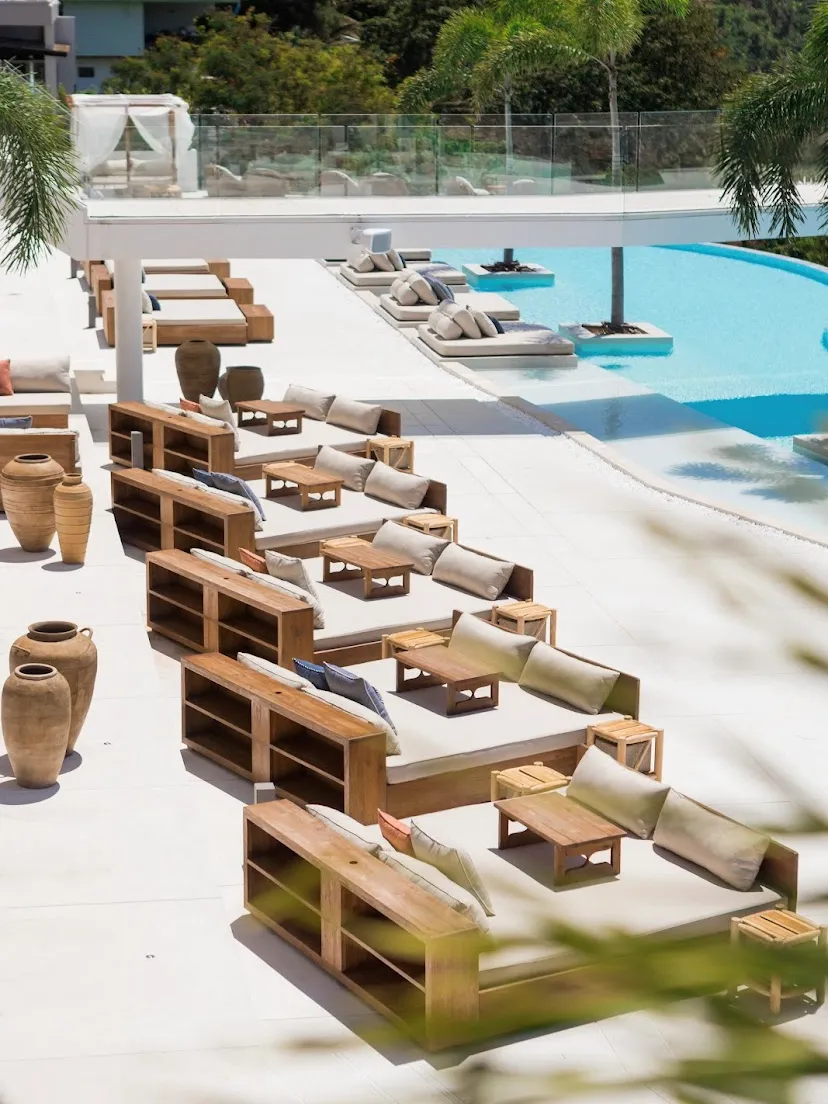
For hospitality programs — pool decks, terrace dining, beach clubs — this difference compounds across hundreds of pieces and multiple replacement cycles.
Reclaimed teak carries a purchase premium, driven by hand recovery labor and 50–65% milling yield rather than raw material scarcity alone. New plantation teak is cheaper per piece at the invoice line.
The procurement question is total cost over the service period:
For pricing mechanics — what drives reclaimed teak cost per cubic meter and how to read a quote — see the pricing section of our B2B buyer’s guide.
This is the one axis where neither material simply “wins.”
A competent manufacturer manages reclaimed variation through grading and control samples — but a buyer who fundamentally wants uniformity should specify plantation stock and save the premium.
Both materials can be legally and responsibly sourced from Indonesia under SVLK timber-legality verification. The difference is the nature of the claim:
For buyers whose end customers scrutinize sustainability claims — European hospitality groups especially — reclaimed’s story is easier to verify and harder to challenge.
Choose reclaimed teak when:
Choose new plantation teak when:
Many programs sensibly mix both: reclaimed for guest-facing outdoor and statement pieces, plantation for back-of-house and high-uniformity lines.
Denser, yes. Old-growth reclaimed teak has tighter growth rings and higher density than 15–25 year plantation wood, which translates to better wear resistance, screw-holding, and joint durability — most noticeable in outdoor service.
Typically yes. Untreated reclaimed teak commonly serves 30+ years outdoors versus 10–20 for plantation teak, due to higher oil content, near-total heartwood, and completed dimensional movement.
The premium is labor, not stumpage: beams must be bought from demolition networks, de-nailed by hand, metal-detected, and re-milled at 50–65% usable yield. Each finished board carries far more processing than a plantation-sawn equivalent.
Usually. Reclaimed shows tight end-grain rings, through-going nail holes, and deep oxidation; plantation wood shows wide rings and uniform blond color. Distressed new teak imitates surface character but fails the end-grain and oxidation-depth checks.
No — it is the right choice for programs prioritizing uniformity, budget, or continuous identical reorders. The mistake is paying reclaimed prices for plantation wood, or specifying plantation stock where a 25-year outdoor service life is expected.
RecycleTeak manufactures reclaimed teak furniture at our SVLK-verified factory in Semarang, Central Java, and can advise honestly on where reclaimed earns its premium and where it doesn’t for your program.

Reclaimed Teak Furniture Manufacturer & Hospitality Furniture Supplier, Indonesia. Sustainably Crafted. Wholesale & Custom Orders Welcome.