
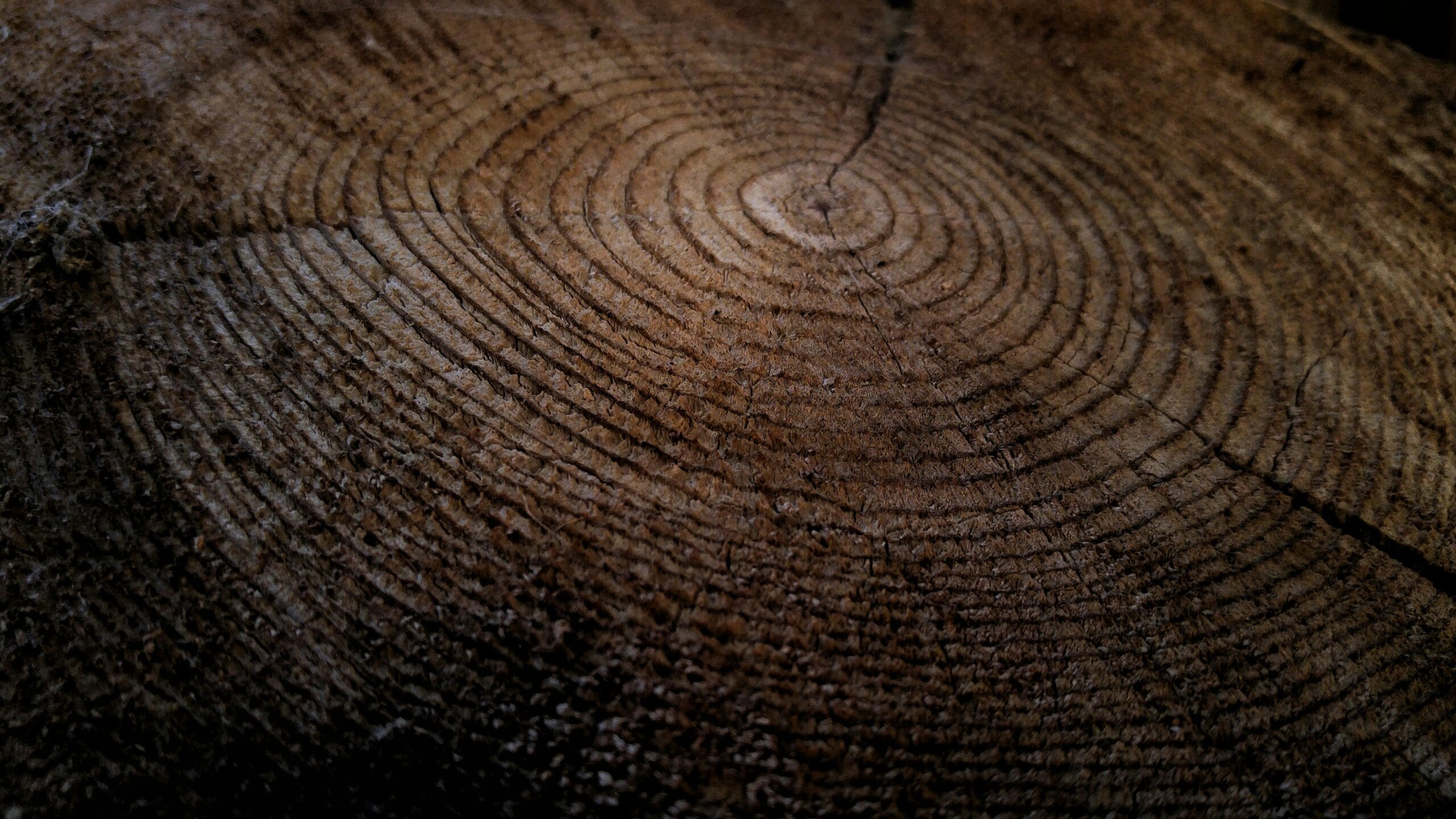
Every furniture supplier claims sustainability. What separates a defensible environmental claim from marketing is the mechanism behind it — and reclaimed teak’s mechanisms are unusually concrete. No tree is felled. Carbon already captured stays captured. Demand for new tropical harvest is directly displaced. These are structural facts about the supply chain, not offsets purchased alongside it.
This article lays out the environmental case for reclaimed teak against new plantation teak — the four mechanisms, the honest caveats, and how commercial buyers can carry the claim into ESG reporting and EUDR compliance without overreaching. It is part of our complete guide to reclaimed teak furniture for B2B buyers.
The simplest and strongest fact: reclaimed teak enters the furniture supply chain from demolished Javanese structures, not from forests or plantations. Every cubic meter used in furniture is a cubic meter for which no tree was cut — this year or any year.
Plantation teak’s harvest claim is legitimately better than natural-forest logging, but it is a managed harvest claim: trees are still felled, and its defensibility depends on rotation practices, replanting rates, and the land-use history of the plantation itself. Reclaimed teak requires no such accounting. There is no rotation period to audit because there is no harvest.
Wood is roughly half carbon by dry mass. Dense old-growth teak locks in on the order of a tonne of CO₂-equivalent per cubic meter — carbon captured by trees that grew through the 19th and early 20th centuries.
When a Javanese structure is demolished, that carbon has three possible fates: the timber is burned (carbon released immediately), landfilled or left to decay (released over years), or recovered into products that keep it stored. Furniture-grade recovery is the best-case outcome: the carbon stays locked in a product built to serve another 30+ years — and the wood remains recoverable again after that.
New plantation teak also stores carbon, but the net accounting must include what the plantation displaced, emissions across the 15–25 year growing cycle, and harvest and replant operations. Reclaimed teak’s storage is already banked; using it simply extends the storage period.
Markets, not sentiments, protect forests. Every container of reclaimed teak furniture sold is a container of new-teak furniture not produced — direct substitution within the same product category, which is precisely the mechanism regulators and serious ESG frameworks care about. Reclaimed supply relieves pressure on both plantation output and, at the margin, illegal natural-forest teak that still leaks into Southeast Asian supply chains.
This substitution logic only holds when the reclaimed claim is genuine — which is why authentication and environmental integrity are the same conversation. Fake reclaimed doesn’t just defraud the buyer; it launders new harvest through a green label.
Reclaimed teak’s production chain — transport from demolition sites, hand de-nailing, re-milling, kiln verification — is labor-intensive but energy-light. It skips the entire plantation cycle: land preparation, nursery, planting, decades of management, harvest machinery, and log transport from concession to mill. The recovery chain’s primary energy inputs are short-haul trucking within Java and milling power. Labor-intensity, the very thing that makes reclaimed cost more per cubic meter, is also what makes it emissions-light.
A claim that admits its limits survives audits; one that doesn’t, doesn’t. Three caveats worth stating plainly:
None of these weaken the core comparison; they define its boundaries. Within the same finished product, reclaimed’s material footprint is structurally lower.
The EU Deforestation Regulation requires demonstrating that timber products are deforestation-free with geolocation-supported due diligence. Reclaimed timber’s position is structurally favorable — the wood left the forest generations ago — but the practical requirement is documentation discipline: a supplier who can trace beams to demolition purchases, holds SVLK verification in their own name, and issues V-Legal documents per shipment. The full supplier-audit framework is covered in the chain-of-custody section of our B2B buyer’s guide.
Structurally, yes: zero new harvest, retained embodied carbon, direct displacement of new-teak demand, and lower processing energy. Plantation teak is a legitimate managed-harvest material, but its claim requires rotation and land-use accounting that reclaimed simply doesn’t need.
Wood is roughly half carbon by dry mass; dense teak stores on the order of a tonne of CO₂-equivalent per cubic meter. Using reclaimed timber keeps carbon captured in the 1800s–1900s locked in service instead of released through burning or decay at demolition.
Its position is favorable — the timber predates any relevant deforestation cutoff by generations — but compliance rests on documentation: traceable demolition sourcing, SVLK verification, and V-Legal export documents from the manufacturer.
Not when the material is genuine and documented. The risk is fake reclaimed — distressed new wood sold under a green label — which is why physical authentication and sourcing records are part of environmental due diligence, not separate from it.
Three things: beam-sourcing records tracing timber to demolition purchases, an SVLK certificate in the manufacturer’s own name, and V-Legal documentation issued with each shipment. A supplier with all three can back every sentence of your sustainability reporting.
RecycleTeak’s reclaimed teak is traceable from Javanese demolition purchases through our Semarang beam yard to your container — SVLK-verified, V-Legal documented, with sourcing records available to every buyer.



Reclaimed Teak Furniture Manufacturer & Hospitality Furniture Supplier, Indonesia. Sustainably Crafted. Wholesale & Custom Orders Welcome.