

If you import wooden furniture into the EU, the EU Deforestation Regulation (EUDR) is about to change what your supplier files need to contain. The main application date is 30 December 2026, so procurement teams are asking the same questions: does it cover our furniture, does reclaimed teak count, and what do we have to hold on file? This guide sets out what the official sources say, where our own reclaimed teak fits, and what we can’t answer for you.
This is not legal advice. We’re a furniture manufacturer, not a customs adviser. Whether a specific shipment falls inside the EUDR is a decision for you, your customs broker and your national competent authority. Sources are linked at the end, and we checked them on 27 October 2026.
The EUDR applies from 30 December 2026 to large and medium operators and traders placing wood products, including certain wooden furniture, on the EU market. Products made entirely from material that has reached the end of its life cycle are excluded. Any new wood in the product stays in scope.
| Who | Application date |
|---|---|
| Large and medium operators and traders | 30 December 2026 |
| Micro and small operators already covered by the EU Timber Regulation (EUTR) | 30 December 2026 |
| Other micro and small operators | 30 June 2027 |
These dates come from the European Commission’s EUDR page. Dates have moved before, so check that page again before you finalize a compliance plan.
The Commission’s summary is direct: any operator or trader who places these commodities on the EU market, or exports from it, must be able to prove that the products do not come from recently deforested land. Wood is one of the listed commodities, and furniture is named as a derived product. If you import furniture and put it on the EU market under your own name, assume you’re in the frame until your broker tells you otherwise.
Scope follows customs classification. The Finnish authority that enforces the regulation puts it plainly: whether a product falls within the regulation is determined by its CN code, and products not listed in Annex I are outside the obligations. Some codes carry an “ex” prefix, which means only certain products inside that code are covered. Its own example is seats, where only wooden seats fall within scope.
For a buyer, that means two checks. First, confirm the CN code your broker uses for each furniture line. Second, confirm the product actually contains the covered material, wood, and not only that the code looks close. Mixed pieces such as teak with a rattan seat need a line-by-line look.
Under Regulation (EU) 2023/1115, the due diligence a covered operator carries out includes information on where the wood was grown, evidence that the land was not deforested after 31 December 2020, proof the wood was legally produced, and a due diligence statement submitted before the product is placed on the market. The practical consequence for a supplier relationship is simple: you will ask for documents that most furniture factories have never been asked to produce.
This is the part buyers ask us about most. The regulation does not apply to products manufactured entirely from material that has reached the end of its life cycle. The Finnish authority states that rule and adds two qualifications that matter for furniture:
The Commission’s guidance document deals with recycled products in its chapter 7, and commentary on it gives timber retrieved from dismantled buildings as an example of material that has completed its life cycle. We’d treat that as a strong indication, not as a guarantee, and read the guidance itself for your product.
Here is how that maps onto our own range:
| Product | Wood source | What to expect |
|---|---|---|
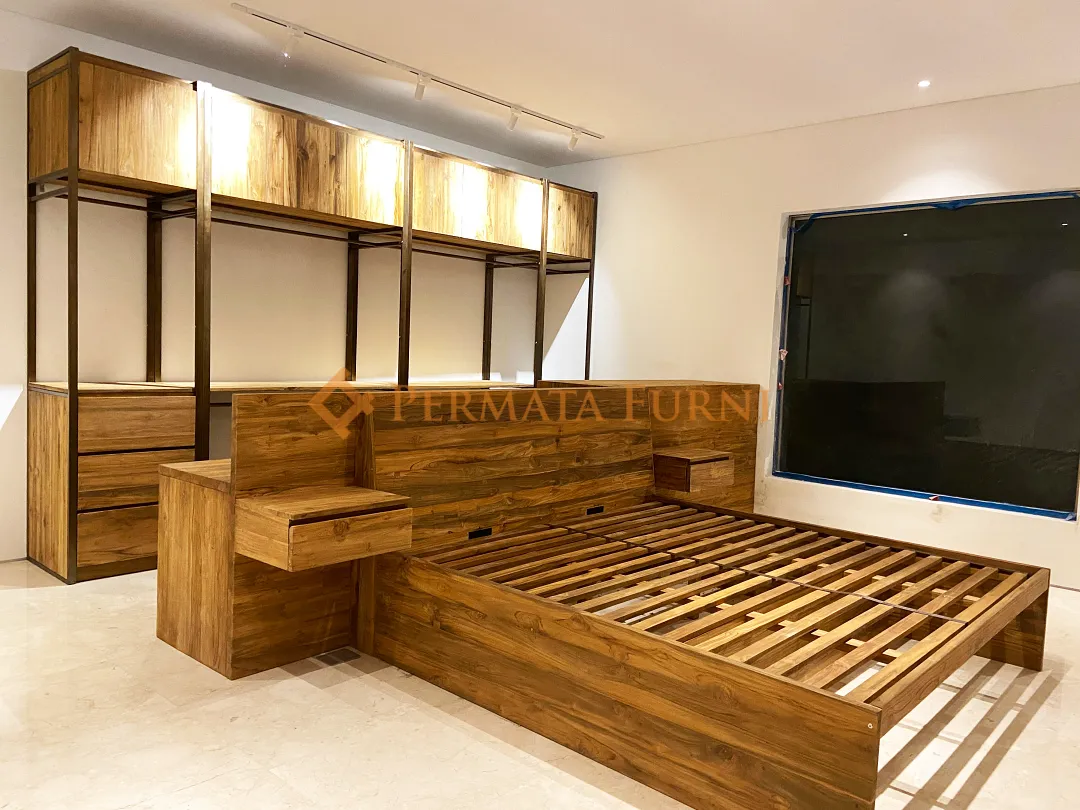
| Core range | 100% reclaimed teak from demolished Javanese buildings | Strongest case for the end-of-life exclusion, supported by sourcing records |
| Plantation teak line (secondary) | New-growth plantation teak | Treat as in scope, with full due diligence |
| Mixed specifications | Reclaimed frame plus any new timber part | The new part stays in scope, so state the composition per SKU |
Our environmental and sourcing guides explain how reclaimed teak is documented: reclaimed teak sourcing and chain of custody and environmental impact of reclaimed vs new teak.
Whatever your broker decides about scope, a reclaimed claim is only as strong as the paper behind it. Ask each supplier for:
We provide sourcing documentation to support buyers’ compliance files on request. The audit framework shows how to test any supplier’s records before you rely on them, and our guide to importing teak furniture from Indonesia covers the standard export paperwork.
From 30 December 2026 for large and medium operators and traders, and for micro and small operators already covered by the EUTR. Other micro and small operators follow on 30 June 2027. Check the European Commission page for the latest dates.
The regulation does not apply to products made entirely from material that has reached the end of its life cycle, and commentary on the Commission guidance cites timber from dismantled buildings as an example. Any new wood in the product stays in scope, so confirm the composition of each product and your classification with your customs broker.
Treat it as in scope. Plantation teak is new-growth timber, so a buyer should expect to carry out full due diligence on it, including origin and legality evidence.
A composition statement per SKU, beam-sourcing records for reclaimed timber, the factory’s legality certificate, V-Legal documents for each shipment, order traceability and an invoice with the agreed CN code.
No, not on its own. SVLK is Indonesia’s timber legality system and is part of the evidence on legal production. The EUDR also asks for deforestation-free evidence and a due diligence statement from the operator.
Shipping to the United States instead? See our guide to the Lacey Act declaration for teak furniture imports.
Need sourcing documents for a shipment? Tell us your products and destination through our contact page and our export team will confirm what we can provide.


Reclaimed Teak Furniture Manufacturer & Hospitality Furniture Supplier, Indonesia. Sustainably Crafted. Wholesale & Custom Orders Welcome.