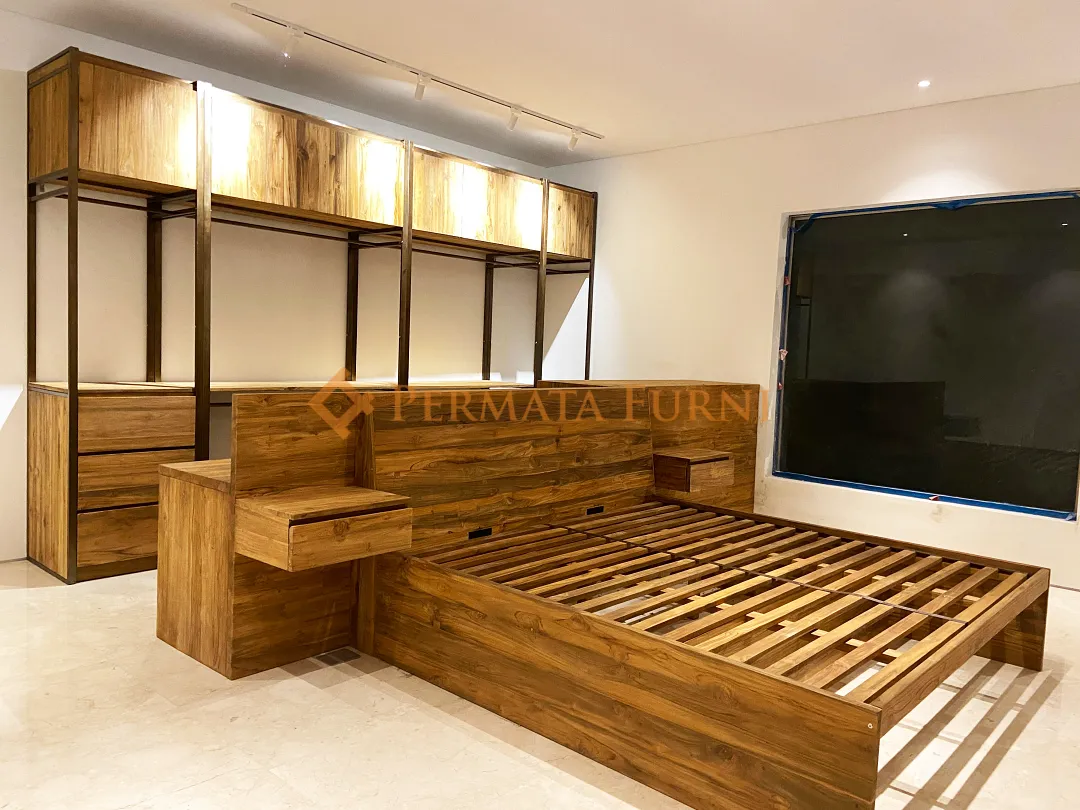
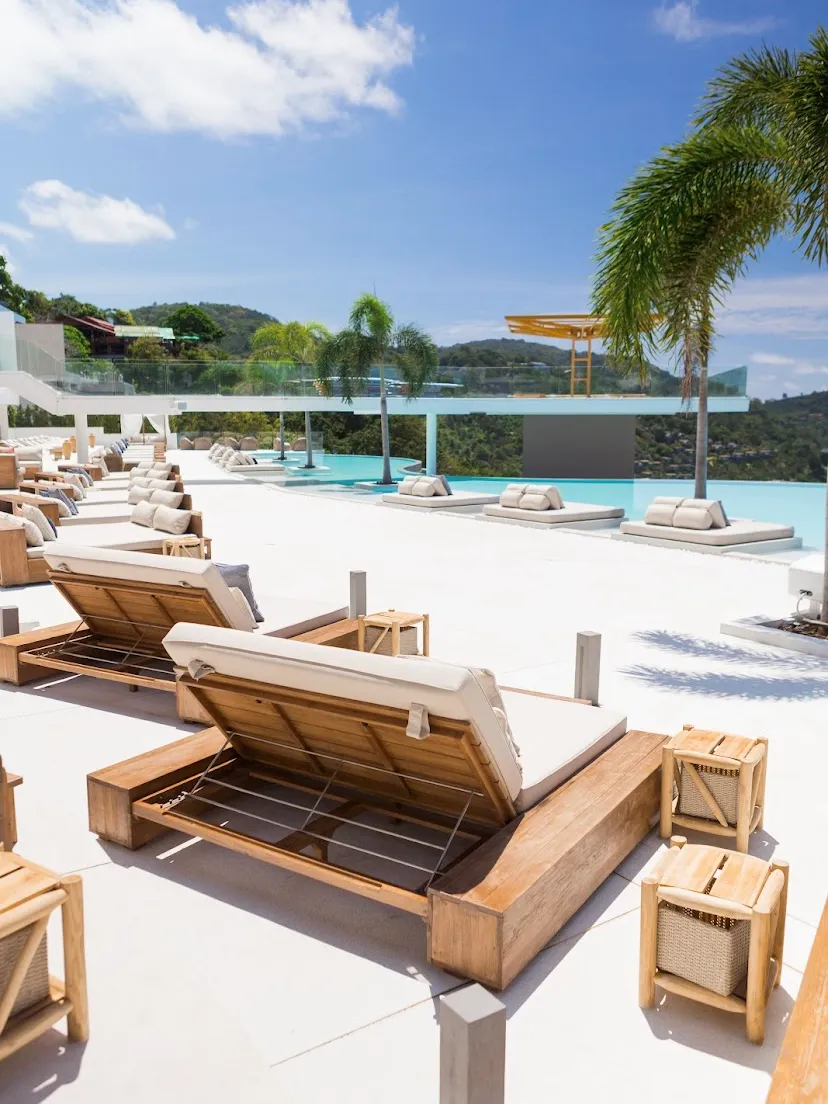
Most disputes over hotel furniture start before the factory cuts any wood. The purchase order said “teak table, natural finish”, the factory read that one way, the designer read it another, and the container arrived with a table nobody had approved. This hotel furniture procurement guide sets out what to specify in writing before you order solid-wood furniture, so that the factory has nothing left to interpret.
We’re RecycleTeak, a reclaimed teak manufacturer in Semarang, so the specification items below come from what our factory needs to know to build to your intent. For how the schedule fits together, see our hotel outdoor furniture procurement timeline. For how to vet a supplier, read choosing and auditing a teak outdoor furniture manufacturer.
Before ordering hotel furniture, put these in writing: timber and grade, construction, hardware, finish, dimensions and tolerances, upholstery, packing, an approved sample, and the commercial and compliance terms. Anything left as “standard” gets decided by the factory, and it won’t always be decided in your favor.
Three inputs have to exist before the specification sheet is worth writing. Industry guides on hotel FF&E planning make the same points, and they hold for solid-wood furniture too:
This is the table we’d ask every buyer to complete per SKU. Items marked with a figure are our own standards, so your supplier’s will differ.
| Item | What to write | Why it matters |
|---|---|---|
| Timber | Species, reclaimed or plantation, and the grade for visible surfaces versus structure | “Teak” alone lets a supplier mix grades across one order |
| Moisture content | A target range after kiln drying. We kiln-dry to 10–12% for outdoor exposure and container transit | Wet timber moves after it lands, and joints open |
| Joinery | Mortise and tenon, dowel, or bolted steel, stated per product | Hotel furniture takes daily abuse that residential furniture doesn’t |
| Hardware | Stainless grade, and 316 for coastal or poolside sites | Cheaper grades stain and corrode in salt air |
| Finish | A named finish plus a physical reference. Natural teak oil is our standard, with UV-stable exterior oil, grey wash, charcoal stain or matt lacquer on request | “Natural” means something different to every factory |
| Dimensions | Overall size plus the tolerances that matter, such as seat height and table height | Mixed chair and table heights ruin a dining room |
| Upholstery and cushions | Fabric, foam and who supplies them | Cushions aren’t part of our standard production, so we recommend sourcing them locally |
| Stacking and weight | Stack count where storage is tight. Our dining chairs and loungers can be designed to stack 6–10 units | Storage space decides whether staff actually use the furniture properly |
| Branding | Laser engraving, branded hardware or custom sling fabric | Branding added later costs more than branding specified now |
| Packing | Wrapping, boxing, pallets, flat-pack where possible, and how cartons are marked by zone | Good marking turns installation into a sequence, not a search |
| Approval sample | A signed-off sample and finish reference before production | It becomes the benchmark for quality control |
Fabric deserves one more line. For upholstered pieces, ask for the rub-test rating and the fire and flammability standard your market and brand require, because both vary by country. One hospitality specification guide cites 50,000 double rubs for guestroom seating, but your brand standard is the number that counts. For the wider question of what “commercial grade” should mean, see our guide to commercial grade outdoor teak furniture specs.
| Space | Spec priorities |
|---|---|
| Lobby and lounge | Finish and visual consistency across many pieces, comfort for long stays, cleaning access |
| Restaurant and bar | Finish that survives repeated cleaning, stable joinery for heavy turnover, matching heights |
| Pool deck and terrace | 316 hardware, outdoor finish, drainage and slat design, and a repair plan |
| Back-of-house and overflow | Stackability and low cost matter more than ageing |
For materials in exposed areas, teak vs aluminum outdoor furniture for resorts includes a zone-by-zone table and a cost-per-year worksheet.
Treat the sample as an inspection, not a courtesy. Check overall dimensions against the drawing, every joint, the finish against your reference, the hardware, and how the piece behaves under load. Keep a dated record of what was approved, with photographs, because it becomes the benchmark the production run is checked against. Our process is a physical sample or finish swatch, photographed for remote sign-off, and production is released only after approval. The full flow is in OEM outdoor furniture from Indonesia.
| Term | Our standard |
|---|---|
| MOQ | 20 units per SKU (catalog), 10 units per SKU (custom specification), mixed SKUs accepted on project orders |
| Sample lead time | 15–30 days |
| Lead time, stock items | 30–45 days ex-factory |
| Lead time, custom | 45–60 days from sample approval |
| Incoterms | FOB Semarang (Tanjung Emas Port), with CIF or DDP on request |
| Payment | 50% deposit on confirmation, 50% against Bill of Lading |
| Loading | Full container load, with LCL consolidation available |
Whatever the supplier, ask where the lead-time clock starts. “Forty-five days” can mean from deposit, from sample approval or from material arrival. Also ask for warranty scope in writing, covering which parts, which causes of failure and for how long.
Decide what documents you need before the order, not when the container is at port. At a minimum, ask for a legality certificate in the factory’s own name (ours is SVLK VLHH-33-07-0834), the V-Legal document for each shipment, and a composition statement per SKU. EU buyers should read our guide to EUDR and teak furniture, and US buyers our guide to the Lacey Act declaration. For auditing the paper trail itself, use the buyer’s audit guide, and to check a supplier’s certificates, our guide to SVLK vs FSC for reclaimed teak.
Timber and grade, moisture content, joinery, hardware grade, finish with a physical reference, dimensions and tolerances, upholstery details, packing, an approved sample, and the commercial and compliance terms. Write each item per SKU so the factory has nothing to interpret.
A catalog order uses a standard piece, with a minimum of 20 units per SKU in our case. A custom order changes the size, finish or hardware, or builds to your own drawings, with a minimum of 10 units per SKU for custom specifications and OEM orders scoped per project.
The sample confirms dimensions, joinery and finish against your specification, and it becomes the benchmark the production run is checked against. Changes after approval mean a new sample and a new production clock.
At least a legality certificate in the factory’s own name, the export legality document for each shipment, a composition statement per SKU, and the commercial invoice and packing list. EU and US buyers may need extra market-specific declarations.
Cushions are not part of our standard production. We recommend that buyers source cushion fabric and foam locally to avoid shipping bulky filled cushions, and we can supply lounger slings in Batyline or Textilene.
For project-scale FF&E production, see our contract furniture manufacturer Indonesia page. Ready to send a specification? Share your furniture schedule through our contact page or the custom project brief, and our export team will reply with a factory-direct proposal.


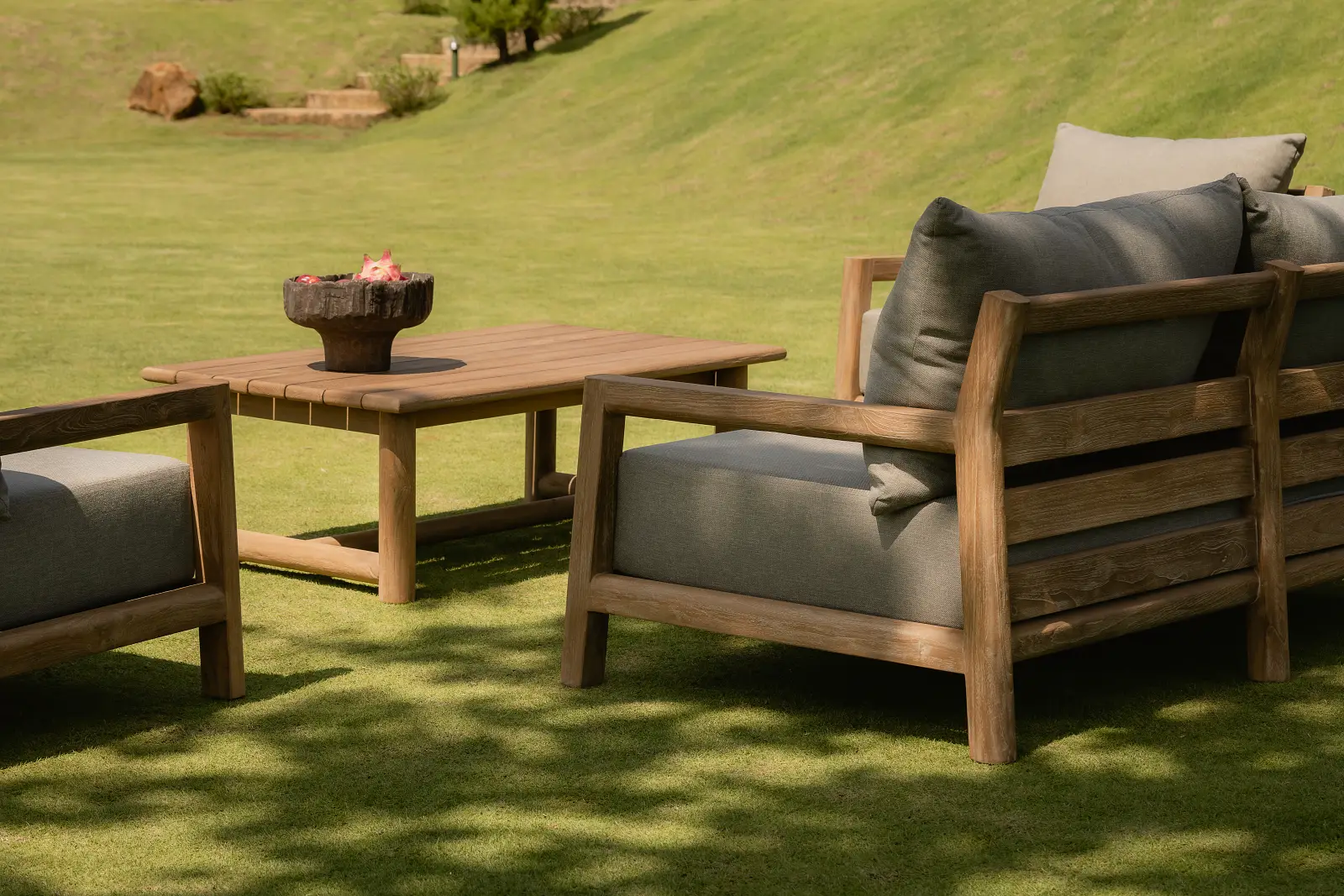

Reclaimed Teak Furniture Manufacturer & Hospitality Furniture Supplier, Indonesia. Sustainably Crafted. Wholesale & Custom Orders Welcome.